Full mouth implants represent a major investment in your smile and quality of life. If you’re considering this treatment, you naturally want to know how long do full mouth implants last and whether they’re worth the cost.
With proper care and maintenance, full mouth dental implants can last 20 years or longer, with many patients enjoying their implants for a lifetime.
The titanium posts that anchor your implants into your jawbone are incredibly durable and can remain stable for decades.
However, the crowns or prosthetic teeth attached to these posts may need replacement every 10 to 15 years due to normal wear and tear.
The longevity of your full mouth implants depends on several factors you can control. Your daily oral hygiene routine, lifestyle choices, and regular dental visits all play a crucial role in determining how long your implants will last.
This guide will walk you through everything you need to know about maintaining your full mouth implants and maximizing their lifespan.
Key Takeaways
- Full mouth implants typically last 20 years or more with proper care, and the titanium posts can last a lifetime
- Daily oral hygiene, avoiding tobacco, and regular dental checkups are essential for extending implant longevity
- While the implant posts are permanent, the attached crowns may need replacement every 10 to 15 years
Expected Lifespan of Full Mouth Implants
Full mouth dental implants are built to last decades when properly cared for, with the titanium posts often lasting a lifetime, while the prosthetic teeth may need replacement after 10 to 20 years.
Understanding what affects how long your full smile makeovers will serve you helps you make informed decisions about this investment in your smile.
Average Lifespan for Implants and Prosthetic Teeth

The titanium posts used in dental implants are designed to be permanent fixtures in your jaw. Studies show that dental implants have a 90 to 95 percent success rate over a 10-year period.
Your implants fuse with your jawbone through a process called osseointegration. Once this bonding is complete, the implant functions as an artificial tooth root that can last your entire life.
The prosthetic bridge or teeth attached to your implants have a different timeline. About 50 to 80 percent of crowns need replacement in 15 to 20 years due to normal wear and tear.
This doesn’t mean your implants have failed, just that the visible teeth need updating, similar to how you might replace worn carpeting while keeping a solid foundation underneath.
Success Rates Over Time
Your full-mouth dental implants become more stable as time passes. The first few months after placement are critical for proper healing and bone integration.
Short-term success rates (1-3 years) remain very high when proper surgical techniques are used. Most failures happen in the early stages if they occur at all.
Long-term implant success rates show impressive durability:
- 90-95% success at 10 years
- Many implants last 20+ years with proper care
- Some patients keep their implants for life
Smokers face higher failure rates at 11 percent compared to 5 percent for non-smokers. Your age, overall health, and bone density also influence how well your implants hold up over decades.
Comparing Longevity: Implants vs. Dentures
Traditional dentures typically last 5 to 8 years before needing replacement. Your jawbone continues to change shape without tooth roots, meaning dentures require frequent adjustments and refitting.
Full mouth implants offer several longevity advantages:
- No bone loss since implants stimulate your jaw like natural teeth
- Fixed in place without slipping or rubbing
- The base implants can last a lifetime
- Only the prosthetic teeth need eventual replacement
Traditional dentures also affect your eating ability and comfort over time as your jaw changes. Full-mouth dental implants maintain their fit and function because they preserve your bone structure.
While dentures might seem less expensive initially, replacing them multiple times over 20 years can cost more than investing in implants that last decades.
What Affects How Long Full Mouth Implants Last?
Several key factors determine whether your full mouth implants will last 10 years or a lifetime. Your daily habits, overall health, bone quality, and the skill of your dental team all play major roles in implant success.
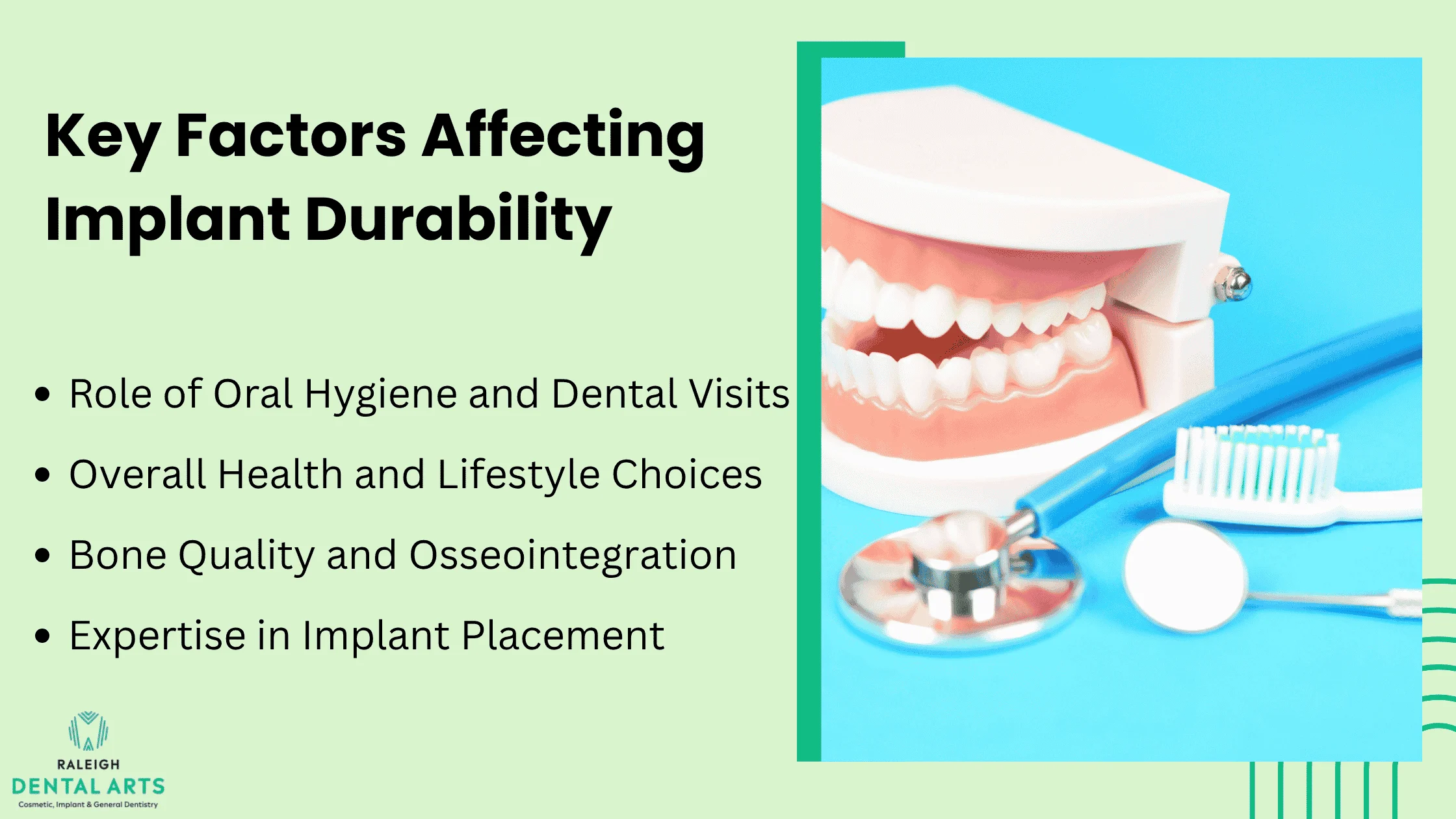
Role of Oral Hygiene and Dental Visits
Your daily oral hygiene routine directly impacts how long your implants will last. Brushing twice a day and flossing around your implants removes plaque that can lead to infections.
Without proper cleaning, you risk developing peri-implantitis. This condition is similar to gum disease and affects the tissues around your implants. It can cause inflammation, bone loss, and even implant failure if left untreated.
Regular dental check-ups are just as important as your home care routine. Your dentist can spot early warning signs of problems before they become serious. Professional cleanings remove buildup that you can’t reach with regular brushing.
Most dental professionals recommend visits every six months. These appointments help prevent bone loss and keep your implants stable for decades.
Overall Health and Lifestyle Choices
Your general health affects how well your body accepts and maintains dental implants. Conditions like diabetes can slow healing and increase infection risk around your implants.
Smoking is one of the worst habits for implant longevity. It restricts blood flow to your gums and jawbone, which interferes with healing after implant placement. Smokers face much higher failure rates than non-smokers.
Lifestyle factors that impact implant lifespan:
- Smoking or tobacco use
- Poor nutrition lacking calcium and vitamin D
- Teeth grinding (bruxism)
- Heavy alcohol consumption
- Uncontrolled diabetes or autoimmune conditions
If you grind your teeth at night, wearing a protective guard prevents excessive pressure on your implants. This simple step can add years to your prosthetic teeth.
Bone Quality and Osseointegration
The strength and density of your jawbone determines implant stability from day one. Osseointegration is the process where titanium posts fuse with your jawbone, creating a solid foundation.
Weak or insufficient bone makes it harder for implants to integrate properly. You might need bone grafting before getting implants if your jawbone has deteriorated from tooth loss or gum disease.
Good bone quality comes from adequate calcium intake, vitamin D levels, and avoiding conditions that weaken bones. Your jawbone needs to stay healthy throughout your life to keep supporting your implants.
People with osteoporosis or other bone-weakening conditions should schedule a consultation with their dentist to discuss their options. Modern restorative dentistry offers solutions even for challenging cases.
Expertise in Implant Placement
The skill and experience of your dental surgeon greatly affects your long-term results. Proper implant placement requires precise positioning and depth to ensure the best outcome.
An experienced implant specialist understands jaw anatomy, bone density, and proper angle placement. They know how to position each implant for maximum stability and natural function.
Poor placement can lead to implant loosening, bite problems, or early failure. Your surgeon should use advanced imaging and planning tools to map out your procedure before starting.
The quality of materials also matters. High-grade titanium implants and well-made prosthetic teeth resist wear and last longer than cheaper alternatives.
Maintenance Tips for Maximum Implant Longevity
Taking care of your full mouth implants requires daily cleaning habits, avoiding certain behaviors that put stress on your implants, and watching for signs of wear or damage.
These steps help protect both the implant fixtures and your surrounding gum tissue.
At-Home Implant Care and Oral Hygiene
Your daily cleaning routine is the foundation of implant care and keeping your smile healthy. Brush at least twice a day using a soft-bristled toothbrush and non-abrasive toothpaste.
Pay extra attention to where your prosthetic bridge meets your gum line. This area collects bacteria that can lead to peri-implantitis if not cleaned properly.
Essential cleaning tools include:
- Water flosser to clean under and around your prosthetic bridge
- Interdental brushes for hard-to-reach spaces between abutments
- Non-abrasive toothpaste to avoid scratching implant surfaces
- An antimicrobial mouth rinse to reduce bacteria
A water flosser works especially well for all-on-4 dental implants maintenance because it reaches beneath the prosthetic arch, where food particles hide.
Clean around each abutment carefully to remove plaque before it hardens into tartar.
Managing Risk Factors and Harmful Habits
Certain habits and health conditions can shorten how long your implants last. Smoking reduces blood flow to your gums and increases your risk of peri-implantitis significantly.
If you grind your teeth at night, you need a custom night guard. Grinding puts excessive force on your implants and can damage the prosthetic bridge over time.
Habits to avoid:
- Chewing on ice, hard candy, or pens
- Using your teeth as tools to open packages
- Eating sticky foods that pull on your prosthetic
- Smoking or using tobacco products
Your overall health matters too. Conditions like diabetes can affect how well your gums stay healthy around your implants. Keep your blood sugar controlled and let your dentist know about any health changes.
Protective Measures and Monitoring Wear
Regular dental check-ups every six months catch problems before they become serious. Your dentist examines your gums for signs of infection and checks the stability of your implant fixtures.
Professional cleanings remove hardened plaque you can’t get at home. Your hygienist uses special plastic or titanium tools that won’t scratch your implants like metal instruments would.
Watch for these warning signs between visits:
- Bleeding or swollen gums around your implants
- Loose feeling in your prosthetic bridge
- Pain or discomfort when chewing
- Bad breath that doesn’t go away with brushing
Your dentist may take X-rays once a year to check the bone around your implants. Catching bone loss early helps prevent implant failure. If you play contact sports, wear a mouthguard to protect your investment from impact damage.
Signs and Solutions: When Full Mouth Implants Need Attention
Recognizing problems early and knowing your repair options can save your implants and prevent more serious complications. Most issues can be fixed if you catch them quickly.
Common Problems and Warning Signals
Pain around your implants after they’ve healed is never normal. Sharp pain when chewing might mean loose implant fixtures or damage to your prosthetic bridge.
Throbbing pain with swelling often signals infection that needs immediate treatment.
Bleeding gums around your implants warn you about inflammation from bacteria buildup. Healthy gum tissue should look pink and firm without bleeding when you brush. Red, swollen, or tender gums mean you need to see your dentist soon.
Any movement in your implants requires urgent attention. Loose abutments can usually be tightened easily.
But if the implant fixtures themselves move in your jawbone, that’s a serious problem. You might notice looseness when chewing or feel it with your tongue.
Watch for changes in how your prosthetic teeth fit or function. Gaps developing between your prosthetic bridge and gums suggest bone loss. Food getting trapped in new places means your fit has changed.
Cracks, chips, or visible wear in your prosthetic teeth should be repaired quickly to prevent bigger problems.
Repairing or Replacing Components
Your dentist can often tighten loose screws or abutments during a simple office visit. This quick fix prevents further damage to your implant system. Adjusting your bite prevents uneven wear and stress on specific implants.
Chipped or cracked prosthetic teeth can be repaired without replacing the entire bridge in many cases. Your dentist might patch small damage or replace individual teeth, depending on the extent of wear.
The prosthetic bridge typically needs replacement every 10-15 years due to normal wear. The good news is your implant fixtures usually stay in place. You’ll just get new teeth attached to the same posts.
This process takes less time than your original surgery and costs much less than starting over.
Cost and Value: Comparing Longevity to Other Options
Full mouth dental implants represent a bigger upfront investment than other tooth replacement options, but their durability changes the financial picture over time.
When you factor in how long implants last compared to alternatives, the cost per year of use becomes competitive.
Full Mouth Dental Implants Cost Overview
The full mouth dental implants cost typically ranges from $20,000 to $50,000 per arch, depending on your location and treatment complexity. This price includes the surgical placement, implant posts, abutments, and the final prosthetic teeth.
All-on-4 implant systems usually fall in the $15,000 to $30,000 range per arch because they use fewer implants. Traditional implant-supported dentures using 6-8 implants per arch cost more due to additional posts.
Several factors affect your specific dental implant cost:
- Number of implants needed
- Type of prosthetic material (acrylic vs. porcelain)
- Bone grafting or other preparatory procedures
- Geographic location and dentist experience
- Sedation options selected
Many dental practices offer financing plans that break the cost into monthly payments. When searching for “dental implants near me,” ask about payment options during your consultation.
Long-Term Value vs. Other Tooth Replacement Options
Traditional dentures cost $1,500 to $3,000 per arch initially but need replacement every 5-8 years as your jawbone changes shape. Over 20 years, you’ll replace them 3-4 times, totaling $6,000 to $12,000 plus adjustment appointments.
Dental bridges last 10-15 years on average and cost $3,000 to $5,000 per bridge. A full mouth restoration with multiple bridges requires several replacements over your lifetime.
Full mouth implants, while more expensive initially, offer considerable value through their durability. The titanium posts often last 20-30 years or longer.
Your prosthetic teeth need replacement every 10-15 years, but the posts stay in place.
Cost comparison over 20 years:
| Option | Initial Cost | Replacements | Total Cost |
| Dentures | $3,000 | 3 replacements ($9,000) | $12,000 |
| Bridges | $15,000 | 1 replacement ($15,000) | $30,000 |
| Implants | $40,000 | 1 prosthetic ($8,000) | $48,000 |
Implants also preserve your jawbone, preventing the bone loss that makes dentures loose and uncomfortable over time.
This eliminates the ongoing costs of denture adhesives, relining appointments, and replacement dentures that no longer fit properly.
Choosing Your Provider for Long-Lasting Results
Your choice of dental provider directly affects how well your implants perform and how many years they last. Finding someone with the right training and a clear plan helps protect your investment.
Importance of Qualified Implant Specialists

Look for a dentist or oral surgeon who specializes in implant placement and has years of hands-on experience.
Check their credentials, including advanced training in implant surgery and restorative dentistry. Ask how many full mouth implant cases they complete each year.
Read patient reviews and ask to see before-and-after photos of actual cases. A skilled provider should use digital planning tools like 3D imaging to map your treatment precisely.
This technology helps them place implants at the right angles and depths for better long-term stability.
Find out what materials and implant brands they use. High-quality titanium implants and reliable prosthetic components make a real difference in durability.
Ask about their success rates at 5, 10, and 15 years. You want someone who tracks outcomes and stands behind their work with clear warranties or maintenance plans.
Scheduling a Consultation and Planning Ahead
When you search for dental implants near me, book consultations with at least two or three qualified providers. During your visit, the dentist should examine your jaw, take X-rays, and discuss your bone quality and overall health.
Ask specific questions about the timeline, number of visits, and what happens if something goes wrong. A good provider explains each step clearly and gives you realistic expectations about healing time and costs.
They should also create a personalized maintenance schedule for after your implants are placed.
Schedule a consultation that includes a detailed treatment plan with costs broken down by procedure.
This planning phase helps you understand exactly what you’re getting and sets you up for implants that can last 20 years or more with proper care.
Frequently Asked Questions
Full mouth implants can last decades with proper care, but their longevity depends on daily cleaning habits, regular dental visits, and avoiding harmful behaviors like smoking or teeth grinding.
What’s the typical lifespan of full mouth dental implants?
The titanium posts that anchor your implants can last 20 to 30 years or even a lifetime when properly maintained. Studies show success rates of 95-98% over 10 years, with many implants continuing to function well beyond that timeframe.
The prosthetic teeth attached to these posts typically need replacement after 10 to 15 years. These visible teeth experience daily wear from chewing, temperature changes, and exposure to foods and drinks.
The metal posts rarely fail once they fuse with your jawbone. The artificial teeth wear out first, but replacing them is straightforward since the posts stay in place.
Can you share some tips for maintaining my full mouth implants?
Brush your implants twice daily using a soft-bristled toothbrush and non-abrasive toothpaste. Pay special attention to where the prosthetic teeth meet your gums.
Use floss or interdental brushes to clean between teeth and around implant posts at least once per day. Water flossers work well for flushing debris from hard-to-reach areas.
Visit your dentist every 3 to 6 months for professional cleanings and checkups. Your hygienist will use special tools designed for implants that won’t scratch the titanium.
Wear a nightguard if you grind your teeth while sleeping. Avoid chewing extremely hard foods like ice or hard candy that could damage your prosthetic teeth.
Are there any factors that can shorten the life of my dental implants?
Smoking is the most harmful habit for implants because it reduces blood flow and impairs healing. Smoking can cut your implant lifespan in half.
Poor oral hygiene leads to infection around implants, which is the main cause of late implant failure. Bacteria buildup causes peri-implantitis, similar to gum disease around natural teeth.
Teeth grinding places excessive stress on both the implants and prosthetic teeth. Uncontrolled diabetes, osteoporosis, and certain medications also affect how well your body maintains the bone around implants.
Your overall bone quality matters too. A dense, healthy jawbone provides better long-term support than weak or thin bone.
How often should I have check-ups for my full mouth dental implants?
You should see your dentist every 3 to 6 months for professional maintenance. These visits are essential for catching problems early when they’re easier to fix.
During checkups, your dentist examines implant stability and looks for signs of infection or bone loss. X-rays taken periodically show what’s happening below your gum line.
Your hygienist removes calculus buildup that home care can’t eliminate. Your dentist may also adjust your bite to prevent uneven wear on your prosthetic teeth.
More frequent visits may be needed if you have risk factors like diabetes or a history of gum disease.
What daily oral hygiene practices do you recommend for implant longevity?
Brush all surfaces of your prosthetic teeth for at least two minutes twice daily. Use gentle circular motions rather than aggressive scrubbing.
Clean between all teeth and around each implant post every day before bed. Special floss designed for implants slides easily under bridges and around posts.
Rinse with an antimicrobial mouthwash to reduce bacteria in your mouth. Choose alcohol-free options to avoid drying out your tissues.
Consider brushing after meals if possible, especially after eating sticky or sugary foods. Replace your toothbrush every three months or when the bristles become frayed.
Is it possible to extend the life of my full mouth implants, and if so, how?
Yes, you can significantly extend your implant lifespan through consistent daily care and regular professional maintenance. Patients who maintain excellent oral hygiene typically experience longer-lasting implants.
Quit smoking if you currently smoke, as this single change dramatically improves implant survival. Work with your doctor to manage health conditions like diabetes that affect healing and bone health.
Protect your implants from physical damage by wearing a nightguard if you grind your teeth and a mouthguard during contact sports. Avoid using your teeth as tools to open packages.
Respond quickly to any warning signs like pain, bleeding, or looseness. Early treatment prevents minor issues from becoming major problems that could lead to implant failure.