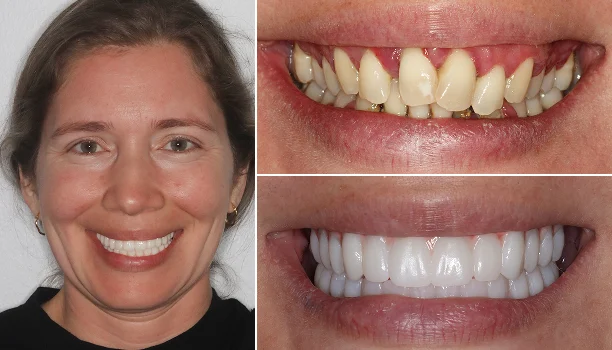
Do These Gum Concerns Sound Familiar?
Many people recognize these signs but put off addressing them. There are real solutions available, and getting evaluated is the first step toward feeling better about your mouth.
What Happens When Gum Disease Goes Untreated?
Infection Spreads Deeper
Bacteria move below the gumline, attacking the bone and tissue that hold your teeth in place.
Bone Loss Accelerates
Once the jawbone begins to deteriorate, the process cannot be reversed without more involved treatment.
Treatment Becomes More Complex
Early-stage gum disease responds well to a deep cleaning; advanced disease requires more extensive care and more appointments.
Costs Increase Over Time
The longer active gum disease continues, the more it typically costs to bring your mouth back to health.
Tooth Loss Becomes a Real Risk
Gum disease is the leading cause of tooth loss in adults, and it doesn't resolve on its own.
Your Overall Health Can Suffer
Research links untreated gum disease to a higher risk of heart disease, stroke, and blood sugar complications.
Addressing gum disease earlier means a simpler path to treatment and a healthier outcome for your teeth and your body.
What Does Gum Disease Treatment Actually Involve?
Periodontal disease (a chronic infection affecting the gums and the structures supporting your teeth) develops when bacteria accumulate below the gumline and trigger inflammation that damages tissue and bone. The primary treatment is scaling and root planing, also called a deep cleaning, which removes hardened bacterial buildup from the roots of your teeth and the pockets between your teeth and gums. Unlike a routine preventive cleaning, a deep cleaning goes beneath the gumline to reach where bacteria are actively causing harm. For most patients, the treatment is divided into sessions covering one area of the mouth at a time to keep you comfortable and allow proper healing between visits.
At Raleigh Dental Arts, we approach gum disease treatment as a whole-health matter, not just a dental issue. Patients seeking periodontal (gum) disease treatment in Raleigh, NC have access to digital X-rays and detailed pocket measurements that help us map exactly where disease is active and track how your tissue responds to treatment. This level of precision shapes a personalized plan rather than a one-size-fits-all approach, so your care reflects what your mouth actually needs.
Transformations That Last
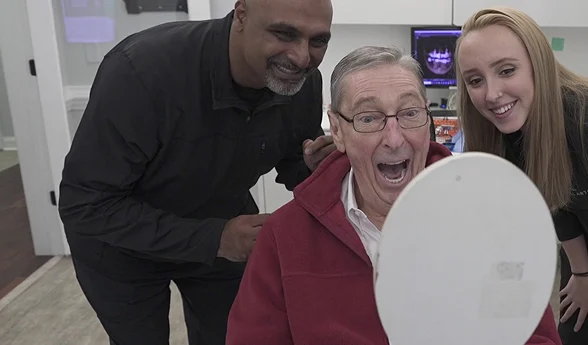
Herb
"I finally found a dental home that feels like family"
Mark
"I Don't Have to Hide My Smile Anymore"
Be our Next Success Story!
Benefits of Periodontal (Gum) Disease Treatment
See What's Possible for Your Smile
All-On-X Dental Implants
Be our Next Success Story!
Request an appointment with one of our doctors and start your smile journey today.
Could Gum Disease Treatment Be Right for You?
Not Sure If Your Gums Need Treatment?
What to Expect During Gum Disease Treatment
Comprehensive Periodontal
Evaluation Before any treatment begins, we take a close look at the full health of your gums. Using a small measuring tool, we check the depth of the pockets around each tooth. Digital X-rays help us see beneath the gumline and assess bone levels. This step gives us the complete picture we need to plan your care precisely, so treatment targets only the areas that need it.
Scaling Below the Gumline
With local anesthetic in place, we work carefully in the pockets around your teeth to remove hardened tartar and bacterial buildup that has accumulated below the gumline. We typically treat one side of the mouth per appointment, which allows the tissue to begin healing between sessions and keeps the experience comfortable and manageable.
Root Planing and Smoothing
Once the buildup is removed, we smooth the surfaces of the tooth roots. This step is important because rough root surfaces make it easier for bacteria to reattach. Smoother roots allow your gum tissue to heal properly and reattach more securely to the tooth, which is what begins to close the pockets and stop the disease process.
Follow-Up and Healing Assessment
A few weeks after treatment, we bring you back to measure your pocket depths again and evaluate how your gums have responded. Most patients see meaningful improvement, with shallower pockets and healthier tissue. Based on this assessment, we discuss your long-term maintenance plan, typically a cleaning schedule every three to four months to keep disease from returning.
Ready to Get Your Gum Health Back on Track?
What to Expect After Gum Disease Treatment
First 24-48 Hours
You may notice some mild tenderness and sensitivity in the treated areas, which is completely normal and expected. Soft foods and gentle rinsing with warm salt water can ease any discomfort during this period. Most patients find they can return to their regular routine the same day, using over-the-counter pain relief as needed.
First One to Two Weeks
Sensitivity typically decreases steadily through the first week as your gum tissue begins to heal and reattach to the roots. You may notice your gums look slightly different as swelling goes down and tissue starts to firm up. This is a sign the healing process is working. Most patients feel fully comfortable within a week or so.
Long-Term Healing
Your gums continue to improve over the following weeks as tissue heals fully and pocket depths begin to close. Consistent home care during this period makes a meaningful difference in your long-term results. At your follow-up appointment, we check your progress and confirm that healing is on track before setting your ongoing maintenance schedule.
Any Questions About Recovery? We're here to help.
Flexible Payment Plans for Your Smile
Don't Wait to Smile. Check out Our Payment Options.
Gum Disease Treatment FAQs
How do I know if I have gum disease?
Is a deep cleaning the same as a regular cleaning?
Will the deep cleaning be painful?
How many appointments will I need?
What happens if I skip treatment?
Does gum disease really affect my overall health?
Can gum disease come back after treatment?
Am I too old or too far gone to benefit from treatment?
Is gum disease treatment covered by dental insurance?
How do I maintain healthy gums after treatment?
Still Have Questions?​