
Many people wonder if they can whiten teeth with veneers.
If you have done cosmetic dentistry, you might notice your natural teeth changing color over time while your dental work stays the same shade.This color difference can be frustrating, especially when you want an even, bright smile.
Whitening treatments only work on natural tooth enamel and do not change the color of veneers, crowns, or composite bonding material.
This happens because whitening agents break down stains in natural tooth pores, but porcelain veneers and composite resin have a different structure that does not respond to bleaching products.
When you try to whiten after getting dental bonding or veneers, your natural teeth may get lighter while your cosmetic work stays the same color.
Understanding what works and what could cause problems will help you make smart choices about your smile. You have options to maintain a bright appearance even with dental restorations, and knowing the facts can save you time and money.
Key Takeaways
- Whitening products cannot change the color of veneers or bonding because these materials do not absorb bleaching agents like natural teeth do
- You should whiten your natural teeth before getting cosmetic dental work so your dentist can match the restorations to your desired shade
- Professional teeth whitening, cleaning, and proper care help maintain the appearance of both your natural teeth and dental restorations without causing damage
How Whitening Agents Work on Different Dental Materials
Whitening agents interact differently with natural teeth compared to dental restorations. The chemical makeup of materials like composite resin and porcelain veneers determines whether bleaching products will change their color.
Effectiveness on Natural Enamel
Your natural tooth enamel responds well to whitening treatments because of its porous structure. Hydrogen peroxide and carbamide peroxide are the two main bleaching agents used in whitening products.
These chemicals break down into oxygen molecules. The oxygen passes through the tiny spaces in your enamel and reaches the dentin layer underneath.
Once inside your tooth, the oxygen molecules react with the colored compounds that cause stains.
Carbamide peroxide releases about one-third of its content as hydrogen peroxide. This means a 30% carbamide peroxide gel equals roughly 10% hydrogen peroxide in strength.
The bleaching process can start working within 15 minutes of application on natural teeth.
Limits with Composite Resin and Porcelain
Whitening products do not work on veneers, crowns, or fillings because these materials have a non-porous surface. Your dental restorations are made to match your natural tooth color at the time they’re placed.
Why restorations don’t whiten:
- Porcelain and composite materials have fixed color pigments
- The surface is too dense for bleaching agents to penetrate
- No chemical reaction occurs between whitening agents and these materials
Traditional whitening does not work on veneers because bleaching gels cannot break through the sealed surface. Your natural teeth will become lighter while your veneers stay the same shade.
Scientific Explanation of Whitening Reactions
The bleaching process involves a chemical oxidation reaction. When you apply whitening products to your teeth, the peroxide breaks down and releases reactive oxygen molecules.
These oxygen molecules interact with chromophores, which are the organic compounds that give stains their color. The oxidation process breaks apart the chemical bonds in these colored molecules. This changes them into smaller, colorless compounds.
Temperature and pH levels affect how well this reaction works. Warmer temperatures speed up the chemical process.
Brown stains from fluorosis or tetracycline respond better to bleaching than white spots, which may just become less noticeable as surrounding areas lighten.
Challenges and Risks When Whitening After Cosmetic Restorations
Whitening treatments after getting veneers or bonding creates specific problems that natural teeth don’t face.
The biggest issues involve uneven color results, how different materials respond to stains over time, and the possibility of damaging your dental work with certain whitening products.
Shade Mismatch and Aesthetic Outcomes
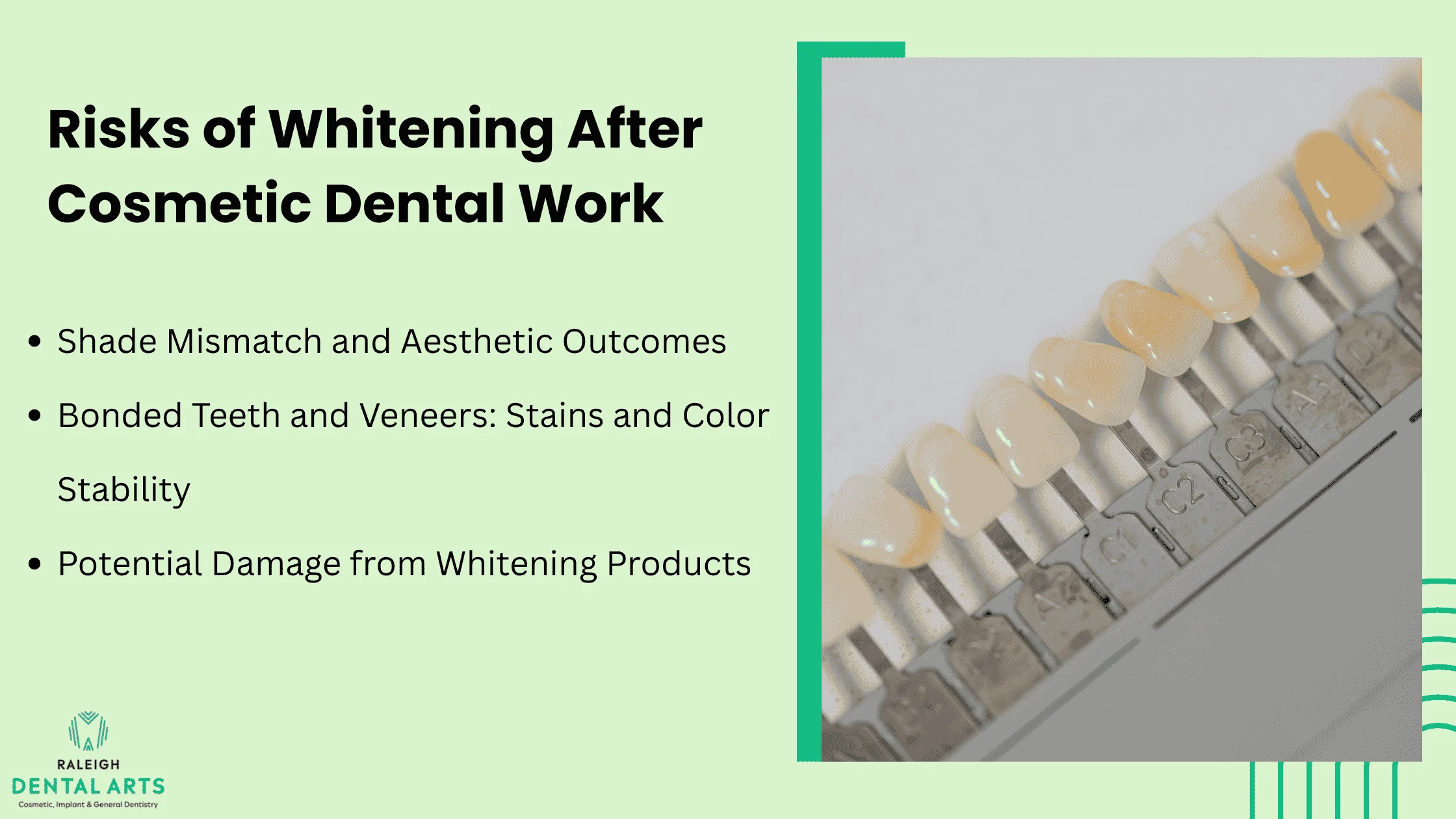
When you whiten your natural teeth after getting veneers or composite bonding, you create a color difference that can make your smile look uneven.
Your natural teeth will get lighter while your restorations stay the same shade they were when placed.
This mismatch becomes especially noticeable on front teeth under natural light.
If your veneers or bonded teeth are visible when you smile, the contrast can make them appear darker or yellower compared to your newly whitened natural teeth.
The problem gets worse the more you whiten. Each whitening session brightens your natural enamel further while your restorations remain unchanged.
Your dentist originally selected the shade using shade guides to match your teeth at that time, but that careful shade selection becomes mismatched once you alter the color of your natural enamel.
The only real fix involves replacing the restorations to match your new tooth color. This means additional dental visits and costs you might not have planned for.
Bonded Teeth and Veneers: Stains and Color Stability
Composite bonding and porcelain veneers handle surface stains differently than natural tooth enamel. While bonding does not whiten with bleaching treatments, both materials can pick up stains from your daily habits.
Bonded teeth are more prone to discoloration over time compared to porcelain veneers.
The composite resin material can absorb pigments from stain-causing foods like coffee, tea, red wine, and berries. Smoking and certain foods gradually change the color of composite bonding.
Veneers resist staining better than composite bonding because porcelain is less porous. However, the edges where veneers meet your natural teeth can still collect surface stains.
Using non-abrasive toothpaste helps maintain bonding and veneers without scratching their surfaces.
Whitening toothpaste and whitening strips won’t change the color of your restorations. These products only work on natural enamel, leaving your bonded teeth or veneers looking dull compared to your brightened natural teeth.
Potential Damage from Whitening Products
Strong whitening products can potentially harm your cosmetic dental work. The peroxide in whitening gels may weaken the bond between composite resin and your natural tooth over time.
Some whitening treatments can affect existing dental restorations by compromising the adhesive materials.
This could lead to edges lifting or bonding material breaking down faster than expected. High-concentration bleaching agents might also make composite bonding more porous, allowing it to stain more easily in the future.
Abrasive whitening products pose another risk. Rough whitening toothpastes can scratch the polished surface of veneers and bonding, making them look dull and more likely to pick up stains.
Once these surfaces get scratched, they lose their smooth finish and natural appearance.
You should talk to your dentist before using any whitening products if you have veneers or bonding. Professional guidance helps you avoid risks that could damage your crowns and fillings or other cosmetic work.
Professional Solutions for a Brighter Smile with Restorations
When you have veneers or bonding, your dentist has several professional options to help brighten your smile without causing damage.
Professional polishing can restore surface shine, while strategic timing of whitening treatments and restorations ensures the best color match.
Professional Polishing and Cleaning
Your dentist can use professional polishing techniques to remove surface stains from both natural teeth and restorations. Professional polishing works differently than whitening because it removes external buildup rather than changing tooth color.
Specialized polishing pastes designed for dental restorations can clean veneers and bonding without scratching the surface.
These pastes are gentler than regular polishing compounds. Your hygienist will select the right type based on your specific restoration material.
Regular cleanings help prevent plaque buildup that can dull the appearance of your smile.
Most dentists recommend professional cleanings every six months. If you drink coffee, tea, or red wine regularly, you might benefit from more frequent visits.
When to Replace Veneers or Bonding
Dental bonding typically lasts 3 to 10 years before needing replacement. Veneers usually last 10 to 15 years.
If your restorations look yellowed or stained compared to your natural teeth, bonding replacement or veneer replacement might be your best option.
Replacing old restorations gives you a chance to match the new color to your freshly whitened natural teeth. This creates a uniform appearance across your entire smile. The bond strength of new materials is often better than older restorations too.
Composite veneers stain more easily than porcelain versions. If you have composite restorations that have yellowed, replacing them with porcelain can give you longer-lasting results.
Your dentist can help you decide if replacement makes sense based on the age and condition of your current restorations.
Planning Sequence for Whitening and Restorations
Whitening your natural teeth before getting veneers gives you the best results. This approach lets your dentist match new restorations to your brightened teeth rather than the other way around.
If you already have crowns or veneers and want to whiten, you need to whiten your natural teeth first. Then you’ll need to replace any visible restorations to match your new shade. This two-step process costs more but creates the most natural look.
Professional teeth whitening treatments work on natural teeth but won’t change the color of dental restorations. Some dentists offer take-home trays that let you whiten gradually. Others prefer in-office treatments for faster results.
Role of Shade Matching Tools
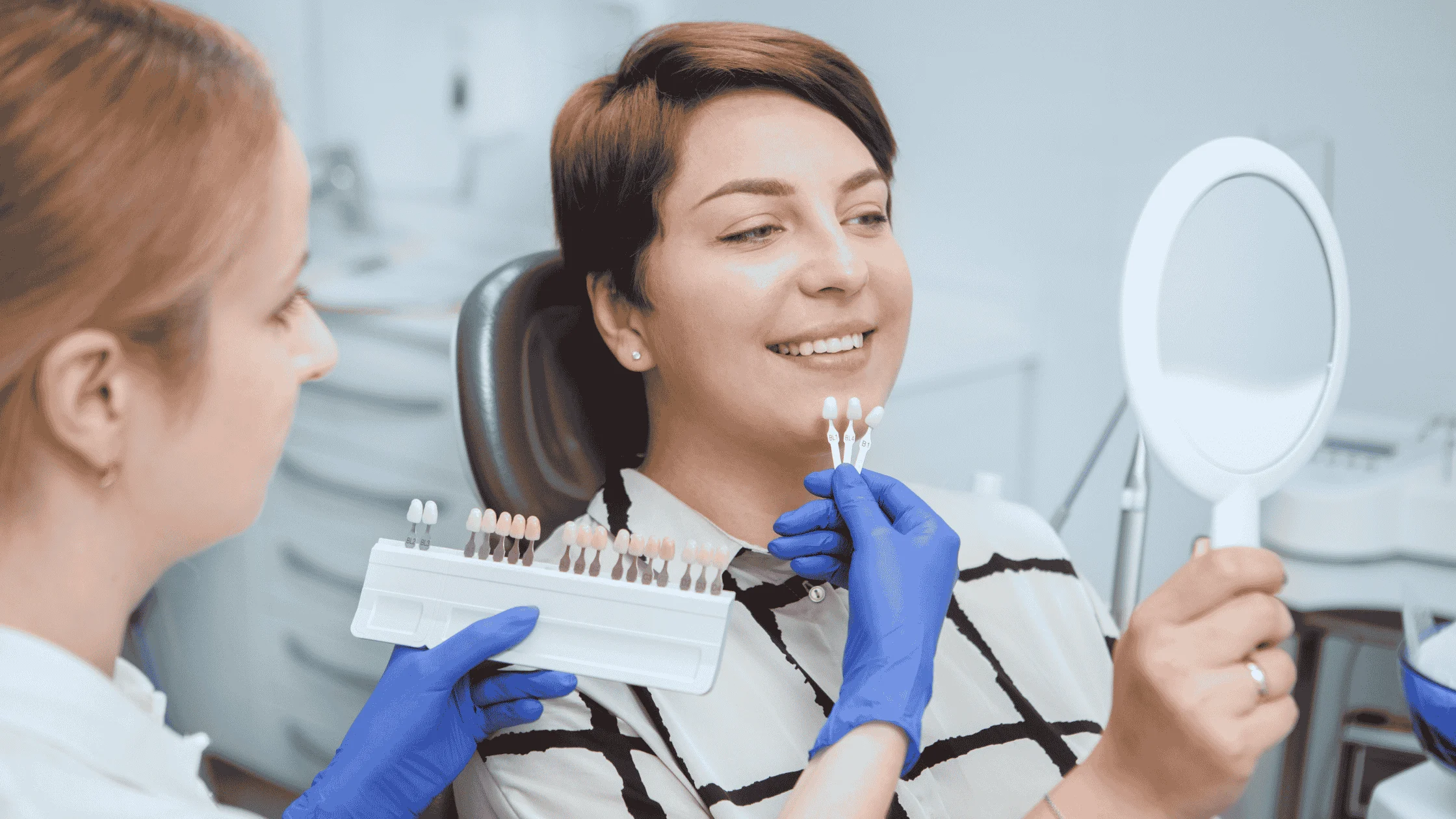
Your dentist uses a shade guide to match restoration colors to your natural teeth. These guides contain dozens of tooth color samples arranged from lightest to darkest. Accurate shade matching is essential for restorations that blend seamlessly.
Digital shade matching tools photograph your teeth and analyze the exact color. These devices are more precise than traditional shade guides. They help ensure your new veneers or bonding matches your whitened teeth perfectly.
Lighting affects how tooth color appears. Your dentist will check the shade match under different lighting conditions. Natural daylight gives the most accurate reading.
The goal is to make sure your restorations look natural in all settings, from your office to outdoor activities.
At-Home Maintenance and Prevention Tips
Taking care of your veneers or bonding at home involves using gentle oral hygiene practices, avoiding foods and drinks that cause stains, and choosing whitening products carefully to protect your dental work while keeping your natural teeth bright.
Oral Hygiene Habits
You should brush your teeth twice a day using non-abrasive toothpaste to protect the surface of your veneers or bonding. Regular toothpaste with harsh abrasives can scratch and dull the finish over time.
Use a soft-bristled toothbrush to clean around your dental work gently. Hard bristles can wear down the protective glaze on veneers and damage composite bonding materials.
Floss daily to remove plaque and food particles between your teeth and around the edges of your veneers or bonding. This prevents staining at the margins where your dental work meets your natural teeth.
Schedule professional dental cleanings every six months to remove surface buildup that regular brushing can’t eliminate. Your dental hygienist can polish your veneers safely without causing damage.
Reducing the Risk of Staining
Limit your consumption of stain-causing foods and beverages like coffee, tea, red wine, and dark berries. These can cause surface stains on both your natural teeth and the edges of your dental work.
Rinse your mouth with water after consuming staining substances to minimize contact time with your teeth. You can also use a straw for dark-colored drinks to reduce exposure to your front teeth.
Avoid tobacco products completely, as they cause yellowing on both natural teeth and can discolor veneers and bonding over time. Smoking also stains the bonding material around the edges of veneers.
Safe At-Home Whitening Recommendations
You can use whitening toothpaste on your natural teeth, but choose one labeled as non-abrasive to avoid scratching your veneers or bonding. These products help remove surface stains from your natural teeth without affecting your dental work.
Avoid at-home whitening strips, gels, or trays that contain bleaching agents if they’ll contact your veneers or bonding. Traditional teeth whitening treatments won’t change the color of porcelain veneers or composite bonding.
Talk to your dentist before using any at-home whitening products to ensure they won’t create a color mismatch between your natural teeth and your dental work.
Your dentist can recommend safe options that brighten your natural teeth without damaging your veneers or bonding.
Choosing the Right Cosmetic Dental Option for Your Whitening Goals
Your choice between veneers, bonding, and crowns affects both your initial smile appearance and your future whitening options.
Each dental restoration responds differently to whitening treatments, so understanding these differences helps you plan ahead.
Comparing Veneers, Bonding, and Crowns
Porcelain veneers don’t respond to traditional whitening treatments because the porcelain material is colorfast. Once your dentist bonds these thin shells to your teeth, their shade stays permanent.
Composite veneers work the same way—they won’t lighten with bleaching gels or whitening strips.
Composite bonding uses the same resin material as composite veneers, so it also resists whitening. The resin can actually stain over time from coffee, tea, or red wine, but whitening products won’t remove those stains.
Crowns behave similarly since they’re made from porcelain, ceramic, or other materials that don’t bleach.
Your natural teeth around these dental restorations will lighten with whitening treatments. This creates a color mismatch problem.
If you whiten your natural teeth after getting veneers or bonding, your restorations may look darker or yellower by comparison.
The best approach is choosing between teeth whitening and veneers based on your long-term goals before starting treatment.
Customizing Your Cosmetic Plan with Your Dentist
You should discuss your whitening goals during your initial consultation before getting any dental restorations. Your dentist can whiten your natural teeth first, then match your veneers or bonding to that brighter shade. This prevents color mismatches later.
Tell your dentist if you plan to use whitening products regularly. They can help you select the right cosmetic treatment that fits your maintenance habits. Some patients prefer whitening alone if their teeth are healthy and just need brightening.
Your dentist can create a phased treatment plan. For example, you might start with professional whitening, wait two weeks for your tooth color to stabilize, then get veneers matched to your new shade. This ensures the best aesthetic outcome for your smile.
Frequently Asked Questions
Whitening products work on natural tooth enamel but not on restorative materials like porcelain or composite resin.
Timing and product selection matter when you have veneers or bonding, and knowing what’s safe can help you avoid mismatched shades or damage to your dental work.
Can I still whiten my teeth if I have veneers or dental bonding?
Yes, you can still whiten your natural teeth if you have veneers or dental bonding. The whitening agents will only affect your natural tooth enamel.
Your veneers and bonding will stay the same color they were when they were placed. This means you could end up with a smile where some teeth look brighter than others.
Most dentists recommend whitening before getting restorations so everything matches from the start. If you already have dental work, you can still whiten, but you’ll need to think about whether the color difference will bother you.
Will whitening treatments change the color of my veneers or bonded teeth?
No, whitening treatments will not change the color of your veneers or bonded teeth. These materials are made from porcelain, zirconia, or composite resin, which don’t respond to bleaching agents the way natural enamel does.
Whitening gels work by breaking down stain molecules inside the porous structure of natural enamel. Veneers and bonding don’t have this porous structure, so peroxide can’t penetrate them.
This is why composite resin does not respond to whitening like your natural teeth do. Once a restoration is made, its color is locked in permanently.
Which whitening options are safest to use with veneers or bonding at home?
The safest at-home whitening options for use with veneers or bonding are products with neutral pH levels and lower peroxide concentrations. Custom trays from your dentist give you the most control over where the whitening gel goes.
Over-the-counter whitening strips and gels are generally safe for your restorations themselves. They won’t damage the materials because the pH of whitening gels is neutral and won’t etch or harm the bonding or veneers.
Whitening toothpastes are the gentlest option. They use mild abrasives rather than bleaching agents, so they won’t create as much color contrast between your natural teeth and your dental work.
Can whitening strips, gels, or trays damage bonding or the edges of veneers?
Whitening strips, gels, and trays typically won’t damage bonding materials or veneer edges when used as directed. The peroxide in these products doesn’t chemically break down composite resin or porcelain.
However, you need to be careful about timing. You should wait at least two weeks after getting new bonding before you start any whitening treatment.
This waiting period lets the bonding materials fully cure. It also allows any residual oxygen from the whitening to dissipate, which helps maintain proper bond strength between the restoration and your tooth.
What should I do if my natural teeth look whiter than my veneers or bonding after whitening?
If your natural teeth look whiter than your veneers or bonding after whitening, you have a few options to fix the mismatch. The most effective solution is to replace the darker restorations with new ones that match your brighter natural teeth.
Your dentist can create new veneers or redo the bonding to match your whitened smile. This gives you an even, natural-looking result across all visible teeth.
If the mismatched teeth are in the back of your mouth where they’re not very visible, you might choose to leave them as is.
Some patients also choose to gradually whiten over time, tracking the shade changes with their dentist to decide when replacement makes sense.
How long should I wait after getting veneers or bonding before using any whitening products?
You should wait at least two weeks after getting veneers or bonding before using any whitening products. This waiting period is important for both the health of your teeth and the strength of your restorations.
The delay allows your tooth and gum tissues to recover from any mild irritation caused by the dental procedures. It also gives cements, adhesives, and resins time to fully cure so they aren’t weakened by peroxide exposure.
Your dentist might recommend waiting slightly longer if your gums are still healing or if you had multiple restorations done at once. Always check with your dentist before starting any whitening routine after dental work.