

Clear aligners for adults offer a discreet way to straighten their teeth without the hassle of metal braces.
If you’ve been thinking about starting orthodontic treatment but want to know what the journey really looks like, the first 90 days are critical for understanding how the process works and what changes you’ll see.
Most adults notice their first visible tooth movements within 30 to 60 days of starting clear aligner treatment, with more dramatic changes appearing by the 90-day mark.
During this time, you’ll learn how to wear your aligners properly, adapt to the routine of switching trays, and start seeing the early stages of your dream smile taking shape.
The process involves more than just popping in a new set of trays every week or two.
Understanding what happens during these first three months helps you prepare for the adjustment period, know when to expect appointments, and recognize the small victories along the way.
From your initial fitting to your first few aligner changes, each step brings you closer to the straighter smile you’ve been wanting.
Key Takeaways
- You’ll start seeing visible tooth movement within the first 30 to 60 days of wearing your clear aligners
- Wearing your aligners 20 to 22 hours per day and maintaining good oral hygiene are essential for successful treatment
- Your orthodontist will monitor your progress through regular checkups and may use attachments or refinements to achieve your final results
Getting Started: Consultation and Customization
Your clear aligner journey starts with a consultation where your provider captures detailed images of your teeth and creates a custom treatment plan.
Most adults can choose between visiting a clinic for digital scans or using an at-home impression kit to get started.

Digital Scans and 3D Imaging
When you visit a dental office for your first clear aligner consultation, your dentist uses digital scanners to create a 3D model of your teeth.
These scans take just a few minutes and feel like a small wand moving around your mouth. The technology captures thousands of data points to map every tooth surface.
Digital scans are more accurate than traditional molds. You won’t need to bite down on messy impression trays filled with putty.
The 3D images let your orthodontist see your teeth from every angle and identify which movements are needed.
Most offices also take photos of your teeth and may use X-rays to check your jaw alignment. This complete picture helps determine if you’re a good candidate for clear aligners.
Treatment Planning and Previewing Your Smile
Using advanced 3D imaging software, your provider designs a custom treatment plan that maps out how your teeth will move. The plan shows exactly which teeth shift during each stage and how many aligner sets you’ll need.
The best part is seeing a virtual preview of your expected results before you even start. This digital simulation shows what your smile will look like after treatment, usually in 4 to 12 months.
You can discuss any concerns about the timeline or final positioning with your orthodontist.
Your treatment plan includes the number of aligners you’ll wear and how often you’ll switch to new sets. Most adults change aligners every one to two weeks.
At-Home Impression Kits and Free Consultations
Many clear aligner companies now offer at-home impression kits as an alternative to office visits. You receive a kit in the mail with materials to make molds of your upper and lower teeth.
The kit includes detailed instructions and everything you need to create accurate impressions.
After you mail back your impressions, a licensed dentist or orthodontist reviews them remotely. Some providers offer a free consultation to assess whether clear aligner treatment fits your needs. This option works well if you have mild to moderate alignment issues.
Keep in mind that complex cases still require an in-person visit. At-home kits work best for straightforward treatments without significant bite problems.
Visit our clinic in Raleigh, NC, to learn if clear aligners are right for your smile goals.
First Aligners: Fitting, Delivery, and Initial Adjustment
Your first set of aligners marks the official start of your orthodontic journey, bringing both excitement and a short learning curve.
You’ll receive multiple trays at once and learn how to manage daily wear while your mouth adjusts to this new routine.
Aligner Design and Delivery Process
At your first clear aligner appointment, you’ll receive several sets of removable trays based on 3D scans of your teeth. Each tray is custom-made to fit snugly and gradually shift your teeth into their planned positions.
Your dentist will show you how to insert and remove the aligners properly.
You may also learn about small tooth-colored attachments created with dental bonding that help the trays apply gentle pressure to specific teeth for more precise movement.
Most adults receive 3-5 sets of trays to take home. You’ll switch to a new set every 7-10 days depending on your treatment plan. Your dental team will confirm your wear schedule and answer questions about storage, cleaning, and care.
Wearing Aligners and Daily Wear Habits
You need to wear your aligners 20-22 hours per day for the best results. That means you’ll only remove them for meals, drinks other than water, and brushing your teeth.
When you begin treatment with clear aligners, building consistent habits makes the biggest difference.
Set phone reminders for the first few weeks and keep your storage case in the same spot. Many people find it helpful to put aligners back in immediately after brushing.
You’ll feel pressure when you first insert a new set of trays. This is normal and shows the aligners are working. The pressure typically fades after 1-2 days as your teeth begin to shift.
Speaking With Aligners and Overcoming Initial Challenges
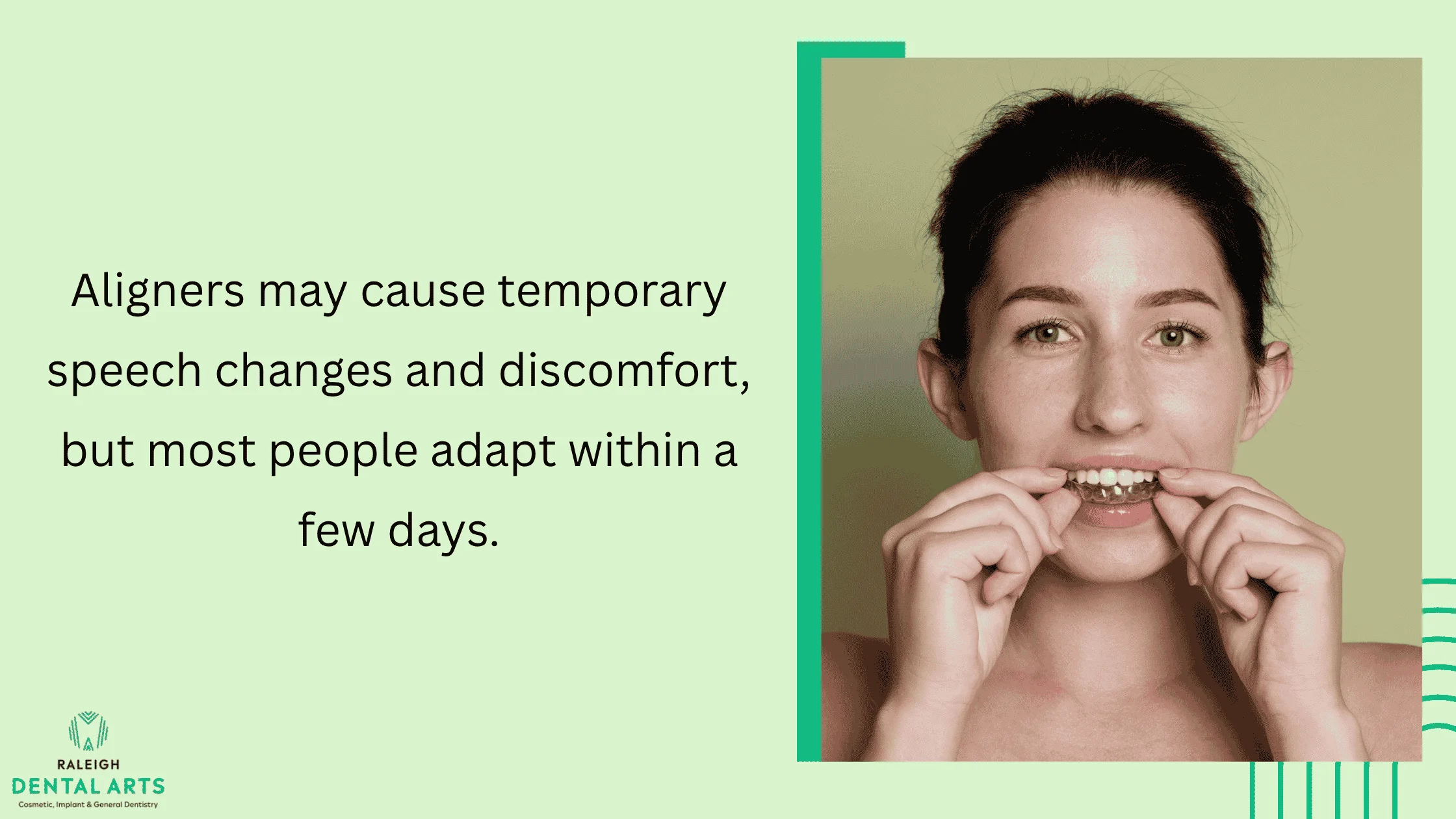
Speaking with aligners feels different at first because the plastic creates a slight thickness over your teeth. You might notice a minor lisp or changes in how certain sounds come out.
Most adults adapt within 3-5 days of consistent wear. Reading out loud at home helps speed up the adjustment. The more you talk with your aligners in, the faster your tongue learns to work around them.
Common first-week challenges:
- Increased saliva production (temporary)
- Slight discomfort when inserting new trays
- Learning to remove aligners without bending them
- Remembering to brush before reinserting
If attachments were placed, you might feel them with your tongue for the first few days. They become less noticeable quickly as you get used to the sensation.
Tracking Progress: Switching Aligners and Treatment Milestones
Your teeth start moving within the first few weeks of treatment. Each new set of aligners you receive applies gentle pressure to shift your teeth into better positions, and small changes build into noticeable improvements over three months.
First 30 Days: Early Changes and Attachments
During your first month, you’ll wear your initial set of aligners for 20 to 22 hours each day. You’ll only take them out for eating, drinking anything other than water, and brushing your teeth.
Your dentist may place attachments on certain teeth at the start of treatment. These are small, tooth-colored bumps that help your aligners grip your teeth better.
They allow the trays to make more detailed movements like rotating or lifting a tooth into place.
You might feel mild pressure or tenderness during the first few days. This is normal and means your teeth are responding to treatment.
By the end of 30 days, you may notice small changes like reduced crowding or a tooth that’s less twisted than before.
Tips for your first month:
- Clean your aligners with a soft toothbrush and cool water
- Keep a case with you for safe storage during meals
- Practice speaking out loud to adjust to wearing the trays
Days 30–60: Switching Aligners and IPR
Around the 60-day mark, you’ll see more visible changes as you continue switching aligners every one to two weeks. Crowded teeth may spread out, and small gaps often start to close.
Some patients need interproximal reduction (IPR) during this phase. IPR involves gentle polishing between certain teeth to remove a tiny amount of enamel. This creates extra space so your teeth can move into better positions without needing extractions.
What to know about IPR:
- It’s carefully measured and guided by your digital treatment plan
- The process is quick and feels like light vibration
- It helps teeth fit together more comfortably
Follow-up visits are important during this period. Your dentist checks that aligners fit properly and confirms your teeth are moving according to plan.
Day 60–90: Refinements, Adjustments, and Results
By 90 days, your smile will look noticeably different. Front teeth typically appear straighter, and your midline may look more balanced.
Around this stage, your dentist will evaluate your progress and discuss refinements. These are extra sets of aligners made after new digital scans to fine-tune your results. Refinements help with:
- Closing remaining small spaces between teeth
- Making front teeth line up more evenly
- Adjusting your bite so teeth meet comfortably
- Polishing the final shape of your smile
Refinements are a normal part of clear aligner treatment. They don’t mean something went wrong. They show your treatment is personalized to achieve the best possible outcome for your specific needs.
Maintaining Oral Health and Aligner Care
Your aligners need daily attention to work properly and stay clean. Proper cleaning prevents bacteria buildup and keeps your removable trays clear and odor-free.
Cleaning Removable Trays and Aligners
You should clean your aligners every time you brush your teeth. Rinse them with lukewarm water and use a soft-bristled toothbrush to gently scrub away any buildup.
Never use hot water on your removable trays. Heat can warp the plastic and ruin the fit. You can use mild, clear antibacterial soap or special aligner cleaning solutions.
Avoid toothpaste when cleaning your aligners. Most toothpastes contain abrasive ingredients that scratch the plastic and make it look cloudy. These tiny scratches also create spots where bacteria can hide.
Soak your aligners once daily in a cleaning solution designed for clear aligner treatment. This helps remove stubborn bacteria and keeps them fresh.
Store your aligners in their protective case when you’re not wearing them to prevent damage and contamination.
Oral Hygiene Tips With Clear Aligners
Brush and floss after every meal before putting your aligners back in. Food particles trapped between your teeth and aligners can cause cavities and bad breath.
Key dental care habits during orthodontic treatment:
- Brush your teeth at least twice daily for two minutes
- Floss once per day to remove plaque between teeth
- Use fluoride toothpaste to strengthen enamel
- Rinse with water after snacks if you can’t brush right away
Your aligners create a sealed environment around your teeth. This means any sugar or bacteria gets trapped against your enamel for hours. Taking extra care with your oral hygiene prevents decay and keeps your gums healthy throughout your treatment.
Travel and Lifestyle Considerations
Pack a travel kit with a toothbrush, toothpaste, floss, and your aligner case. Keep this kit in your bag so you can clean your teeth and aligners anywhere.
When eating out, excuse yourself to the restroom to remove your aligners before your meal arrives. Rinse them with water and store them safely in their case. You can quickly brush or at least rinse your mouth before putting them back in.
Plan your meals around your 22-hour daily wear schedule. You only have about two hours total for eating and drinking throughout the day.
Consider combining snacks with main meals to maximize your aligner wear time and stay on track with your orthodontic treatment.
Transitioning to Retainers and Long-Term Retention
After your clear aligner treatment ends around day 90 or beyond, you’ll enter the retention phase where retainers become your best friend for keeping your teeth in their new positions.
Your dream smile needs protection because teeth naturally want to shift back over time.
Understanding Retention and the Retention Phase
The retention phase starts right after you finish your last aligner tray. Your teeth and the bone around them need time to stabilize in their new positions. This process takes about 12 months for your teeth to fully settle.
During the first 3 to 6 months, you’ll need to wear your retainer for 20 to 22 hours per day, which is basically the same schedule you followed with your aligners.
After this initial period, most people switch to nighttime-only wear for 8 to 10 hours.
The reality is that retention is a long-term commitment, and you should plan to wear your retainer indefinitely to protect your results. Even missing a few nights can allow minor shifting to occur.
Think of retainers as the final step that locks in all the progress you made during treatment.
Types of Retainers: Removable and Fixed
You have two main options for retainers after clear aligners. Removable retainers look similar to your aligners with clear plastic trays that fit over your teeth. They’re easy to clean and remove for eating or special occasions.
Fixed retainers consist of a thin wire bonded to the back of your front teeth, usually on the lower arch. These stay in your mouth 24/7 and work continuously without requiring you to remember to put them in.
Many people choose fixed retainers for their lower teeth and removable ones for the upper.
Your orthodontist will recommend which type works best based on your specific case. Some people use both types together for maximum protection of their clear aligner results.
Retainer Care and Maintaining Your Dream Smile

Clean your removable retainer daily with a soft toothbrush and gentle soap, but avoid using toothpaste because it can scratch the plastic. Never use hot water as it will warp the material and ruin the fit.
Soak your retainer weekly in a cleaning solution designed for retainers or dentures. Always store it in a protective case when not wearing it, since most retainers get lost or damaged when wrapped in napkins.
For fixed retainers, use floss threaders or special orthodontic floss to clean around the wire daily. Most retainers need replacement every 6 to 12 months due to normal wear and tear.
Order a backup retainer to keep on hand in case yours cracks or gets lost, so you don’t risk your teeth shifting while waiting for a replacement.
Frequently Asked Questions
Starting clear aligner treatment brings up a lot of practical questions about comfort, wear time, and what changes you’ll actually see in those first three months.
What will my teeth and bite feel like during the first few weeks of aligner treatment?
Your teeth will likely feel tight and somewhat sore during the first few days of wearing aligners. This pressure is normal because the aligners are actively shifting your teeth into new positions.
Your bite may feel slightly off or different when you remove your aligners to eat. Some people notice their teeth don’t fit together quite the same way they used to, which happens as your teeth begin moving.
The tightness usually lessens after three to five days with each new set of aligners. Your mouth adjusts to the sensation, though you’ll feel renewed pressure each time you switch to a fresh set.
How many hours a day do I need to wear my aligners to stay on track?
You need to wear your aligners for 20 to 22 hours each day to stay on schedule with your treatment plan. This leaves you about two to four hours total for eating and cleaning your teeth.
If you wear them less than 20 hours daily, your teeth may not move as planned. This can delay your progress and extend your overall treatment time.
Most people find it helpful to wear their aligners during sleep and only remove them for meals and oral hygiene. Setting phone reminders can help you track your wear time during the adjustment period.
What can I expect at my first follow-up appointment, and how often will I need check-ins?
Your first follow-up typically happens around four to eight weeks after you start treatment. Your dentist or orthodontist will check how your teeth are responding to the aligners and whether you’re tracking properly.
During this visit, they’ll examine your teeth and may take photos to compare with your starting point. They’ll also answer any questions about discomfort, fit issues, or cleaning concerns you’ve experienced.
Follow-up appointments usually occur every six to eight weeks throughout your treatment. These check-ins ensure your teeth are moving correctly and help catch any problems early.
How do I handle soreness or pressure when switching to a new set of aligners?
Switch to new aligners at night before bed so you sleep through the initial hours of pressure. This makes the tightest period more comfortable since you’re not actively aware of the sensation.
Over-the-counter pain relievers like ibuprofen can help manage soreness during the first day or two with a new set. Take them as directed on the package or as your dentist recommends.
Stick to softer foods for the first 24 hours after switching aligners. Cold foods like smoothies or yogurt can also provide some relief to sore teeth and gums.
What are the best tips for eating, drinking, and cleaning my aligners during the first three months?
Remove your aligners every time you eat or drink anything except plain water. Wearing them while consuming food or colored beverages can stain the plastic and trap particles against your teeth.
Brush your teeth after every meal before putting your aligners back in. If you can’t brush right away, rinse your mouth thoroughly with water to remove food particles.
Clean your aligners twice daily with a soft toothbrush and clear, unscented soap or the cleaning solution your provider recommends. Avoid hot water, which can warp the plastic and affect the fit.
Store your aligners in their case whenever they’re not in your mouth. This prevents loss, damage, or bacterial contamination from leaving them exposed.
When might I start noticing visible changes in my smile, and what’s realistic by day 90?
Most adults begin seeing subtle changes around week four to six, though this varies based on your specific treatment plan. You might notice gaps closing slightly or crowded teeth starting to straighten.
By day 90, you’ll likely see noticeable improvements in alignment, especially if your case involves mild to moderate crowding or spacing. The visible progress depends on how much movement your teeth need overall.
Take photos every two weeks to track your progress since daily changes are hard to spot on your own. Comparing these photos side by side makes the transformation more obvious and keeps you motivated.