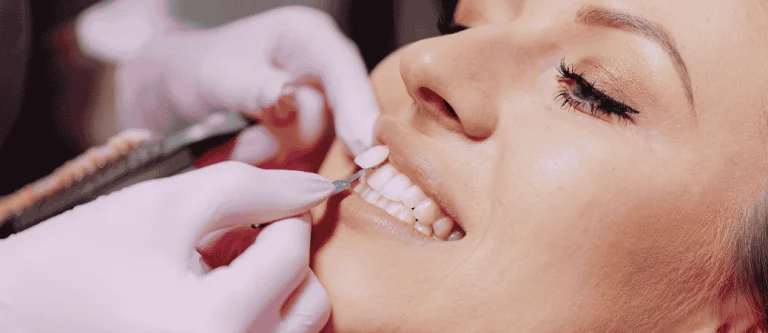

You bought the whitening kit, followed the directions, and waited. But your teeth look almost the same as before you started.
This is more common than you might think, and understanding why teeth whitening isn’t working can save you time and money.
Teeth whitening not working usually means the stains you are trying to fix are not on the surface of your teeth, but deeper inside them, where whitening gel cannot reach.
Your tooth discoloration might come from your natural tooth color, old dental work, or even a health condition rather than food and drinks.
Understanding why your whitening results are falling short can save you money and frustration. In this post, we will break down what really causes stains, why some teeth resist whitening, and when you need professional teeth whitening.
Key Takeaways
- Not all stains are the same, and figuring out where yours comes from can help explain why whitening isn’t working.
- Certain habits, health issues, and even the natural makeup of your teeth can block or reduce your whitening results.
- Crowns, veneers, fillings, and bonding do not change color with whitening products, so a dentist may be your best next step for a safe fix.
Table of Content
- Start With the Type and Source of Discoloration
- Common Barriers That Keep Whitening Gel From Working
- How Enamel and Oral Health Affect Tooth Shade
- Why Crowns, Veneers, Fillings, and Bonding Stay the Same Color
- What to Do for Safer, More Predictable Results
- Frequently Asked Questions
Start With the Type and Source of Discoloration
Not all tooth stains are the same, and knowing where yours comes from is the first step to fixing it. Some stains sit on the surface, while others form deep inside the tooth where whitening gels can’t always reach.
Surface Stains Versus Intrinsic Stains
Your teeth can develop two main kinds of stains: extrinsic and intrinsic.
- Extrinsic stains sit on the outer layer of your enamel. They usually come from things like coffee, tea, red wine, or smoking. These surface stains often respond well to whitening treatments and good brushing habits.
- Intrinsic stains are different. They form inside the tooth, often in the dentin layer beneath your enamel. This type of internal discoloration can come from things like certain medications, too much fluoride, or an injury to the tooth.
Whitening products work by breaking down stain particles. But if your stain is intrinsic, over-the-counter treatments may not fully fix it. That’s often why your whitening results feel disappointing.
What Yellow, Brown, Gray, and Patchy Teeth Can Indicate
The color of your stain can give you clues about its cause.
- Yellow teeth often point to a thinning enamel layer. This lets the natural yellow color of your yellow dentin show through more clearly.
- Brown stains are commonly linked to coffee, tea, tobacco, or in some cases, tooth decay.
- Gray teeth can result from old dental fillings, certain antibiotics taken during childhood, or nerve damage inside the tooth.
- Patchy or streaky white and brown spots are often a sign of fluorosis, which happens when a child gets too much fluoride while their teeth are still forming.
Knowing your stain’s color pattern helps you and your dentist choose the right treatment instead of guessing.
Why a Single Dark Tooth Needs a Dental Evaluation
If just one tooth looks darker than the rest, don’t ignore it. A single dark tooth often signals a problem inside that specific tooth, not just a stain on the surface.
This can happen after dental trauma, like a fall or sports injury, even if it happened years ago. The impact can damage the nerve inside the tooth, causing it to darken over time as blood flow changes.
A dark tooth can also mean the nerve is dying or already dead. This needs prompt attention from a dentist, since whitening alone won’t restore its natural tooth color or fix the underlying issue.
Common Barriers That Keep Whitening Gel From Working
A few simple things can stop whitening gel from doing its job, even when you follow the instructions. Buildup on your teeth, weak products, and daily habits can all get in the way of real results.
Plaque and Tartar Can Block Contact With Enamel
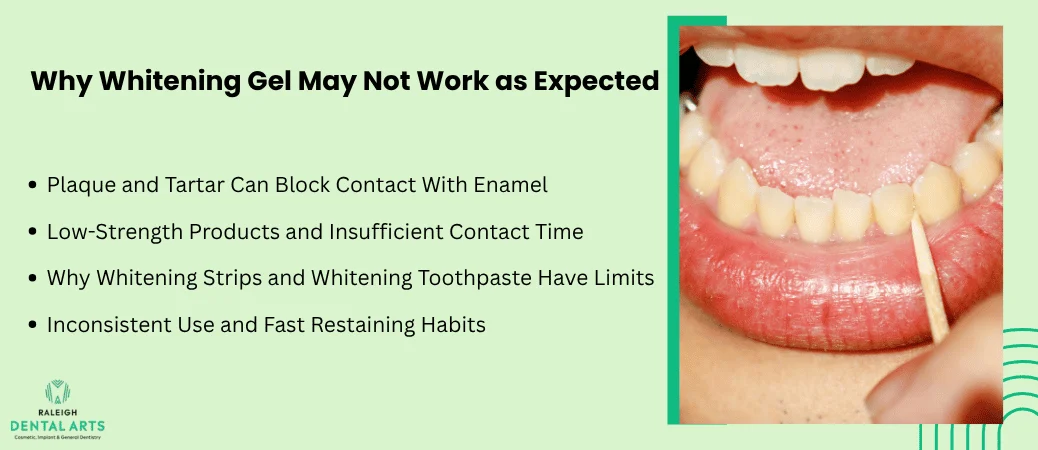
Whitening gel needs to touch your enamel directly to work. If plaque buildup or tartar buildup sits on top of your teeth, the gel can’t reach the surface underneath.
Plaque forms every day from food and bacteria. It’s soft at first, but it hardens into tartar if it isn’t brushed away in time. Once tartar forms, only a dentist can remove it.
This is one of the most overlooked reasons why plaque or tartar buildup can block whitening gel from reaching the enamel.
If you skip a cleaning before whitening, you may be bleaching a layer of buildup instead of your actual teeth. A quick cleaning first can make a big difference in your results.
Low-Strength Products and Insufficient Contact Time
Not all whitening products use the same strength of bleaching agents. Store-bought kits often use lower amounts of hydrogen peroxide or carbamide peroxide to keep them safe for everyone to use at home.
This lower strength means they need more contact time to work. If you rinse too soon or don’t leave the product on long enough, the bleaching agents won’t have time to break down stains.
At-home whitening can still work well, but only if you follow the timing on the label. Cutting corners on contact time is one of the easiest ways to end up with barely any change at all.
Why Whitening Strips and Whitening Toothpaste Have Limits
Whitening strips and whitening toothpaste are popular, but they aren’t made for every type of stain. Strips only cover part of your tooth and often miss the edges near your gums.
Whitening toothpaste works differently. It relies more on mild abrasives to buff away surface stains rather than bleaching agents like peroxide.
That means it can help with light surface stains, like tar and tobacco stains, but it won’t lighten teeth the way a gel or tray system can..
Inconsistent Use and Fast Restaining Habits
Whitening takes routine. If you use a product for a few days, stop, then start again weeks later, your teeth may never build up enough change to notice.
Daily habits also work against you. Coffee, tea, red wine, and tobacco stains can build back up faster than gentle whitening can remove them.
Some patients notice this pattern, especially when coffee and wine can re-stain teeth faster than whitening can lift stains.
If you want to keep results, try to stick to a steady routine and cut back on staining drinks, at least while you’re actively whitening.
How Enamel and Oral Health Affect Tooth Shade
Your tooth color depends on more than just surface stains. The thickness of your enamel, your eating habits, and your overall oral health all play a role in how white your teeth look.
Thin Enamel Can Reveal More Yellow Dentin
Your tooth enamel is the outer layer that protects your teeth. Underneath it sits a yellow layer called dentin.
When your enamel is thick, it hides most of that yellow color. But when enamel thickness decreases, more yellow dentin shows through.
This means two people can follow the exact same whitening routine and get different results. If you have naturally thin enamel, your teeth may look more yellow no matter how much you whiten.
Enamel doesn’t grow back once it wears down, so this effect tends to get worse over time rather than better.
Acid Erosion and Aggressive Brushing Can Worsen Yellowing
Acidic foods and drinks can wear away your enamel bit by bit. Common culprits include:
- Citrus fruits and juices
- Soda and sports drinks
- Wine
- Vinegar-based dressings
Each time you eat or drink something acidic, your enamel softens for a short period. If you brush right away, you can scrub away tiny bits of that softened enamel.
This is why dentists recommend waiting about an hour before brushing after acidic foods.
Aggressive brushing causes similar damage. Pressing too hard with your toothbrush, especially with a hard-bristled brush, wears down enamel over months and years.
Once this happens, more yellow dentin becomes visible, and whitening products have less enamel to work with.
Treat Cavities and Gum Problems Before Whitening
Your oral health needs to be in good shape before you start whitening. Tooth decay and cavities can cause dark spots or discoloration that whitening products won’t fix.
In some cases, whitening gel can even seep into a cavity and cause pain.
Gum disease also affects how your teeth look. Swollen or receding gums can expose more of the yellowish root surface, which doesn’t respond to whitening the way enamel does.
This is why a comprehensive dental exam matters before you try any whitening product. A dental evaluation helps your dentist catch problems like cavities or gum disease early.
Treating these issues first means your whitening treatment has a better chance of working the way you expect.
Why Crowns, Veneers, Fillings, and Bonding Stay the Same Color
Whitening gel only works on natural tooth enamel, not on man-made materials. This is why your smile can look uneven after a whitening treatment if you have crowns, veneers, or tooth-colored fillings.
Which Dental Restorations Do Not Respond to Bleaching
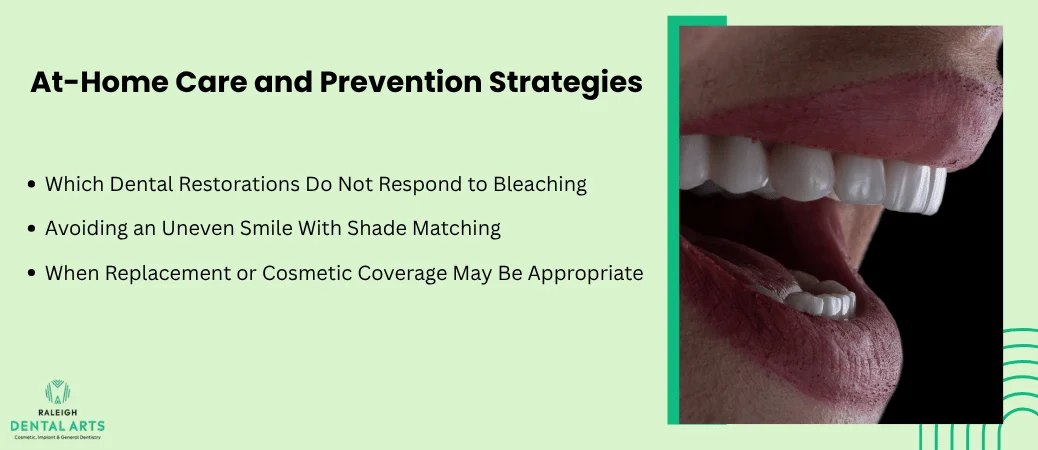
Most dental restorations are made from materials that do not react to whitening gel. Here’s a quick look at common ones:
- Crowns: Made from porcelain, ceramic, or zirconia
- Veneers: Usually porcelain veneers, though composite veneers exist too
- Fillings: Often made from composite resin, matched to your original tooth color
- Dental bonding: Also made from composite resin, used to repair chips or gaps
Bleaching agents work by breaking down stain molecules inside your enamel. Since porcelain, ceramic, and composite resin don’t have the same pore structure as natural enamel, whitening gel simply can’t lighten them.
This means these restorations stay locked at the shade they were made to match, no matter how much you whiten your natural teeth around them.
Avoiding an Uneven Smile With Shade Matching
Shade matching happens before your restoration is placed, when your dentist picks a color to match your natural teeth at that time.
The problem shows up later, when your teeth whiten but your crown or filling doesn’t move at all.
This creates a visible difference, especially on front teeth. Your natural enamel might go several shades lighter, while your restoration stays exactly where it started.
If you have a visible mismatch after whitening, it usually means your natural teeth whitened but your restoration didn’t follow along.
A good rule of thumb: if you’re planning a teeth whitening treatment, do it before getting any new restorations placed. This way, your dentist can match the new crown, veneer, or filling to your brighter, post-whitening shade.
When Replacement or Cosmetic Coverage May Be Appropriate
If your restorations are already noticeably lighter or darker than your natural teeth, you have a few options.
Your dentist might suggest polishing the surface, which can sometimes help minor surface stains on composite bonding.
For bigger mismatches, replacement is often the better fix. This means swapping out an old crown, veneer, or filling for a new one made to match your current, whitened smile.
In some cases, a dentist may recommend a full smile makeover approach if you have several restorations that need updating at once.
Talk to your dentist before whitening if you already have visible restorations. They can help you plan the right order of treatments so your whole smile ends up looking consistent.
What to Do for Safer, More Predictable Results
Getting a brighter smile takes more than just picking a product off the shelf. A few simple steps can help you get better results and protect your teeth at the same time.
Schedule a Cleaning and Exam Before Trying Again

Before you try whitening again, book a dental evaluation with your dentist.
A dental cleaning removes plaque and tartar that can block whitening gel from reaching your enamel.
Your dentist can also check for cavities or gum disease, since whitening on damaged teeth can cause pain or make problems worse.
This step only takes one visit, but it can save you time and money. You’ll know exactly what’s causing your stains before you spend more on treatments that might not work.
Dental cleanings also give your dentist a chance to spot old fillings or crowns. These won’t lighten with whitening, so it helps to know this in advance.
When Professional Whitening Is a Better Option
If home kits keep letting you down, professional teeth whitening may be worth trying instead.
In-office whitening uses a stronger, professional-grade whitening gel than what you’ll find in stores. Your dentist applies it under controlled conditions, which often leads to faster and more even results.
Gum protection is another key benefit. Dentists use a barrier or gel to shield your gums from the whitening agent, lowering your risk of irritation.
This option costs more than drugstore kits, but it’s often more predictable. You’ll also get guidance on what caused your stains, so you can avoid repeating the same mistakes.
Managing Sensitivity Without Overusing Bleach
Sensitive teeth are common after whitening, but you don’t need to keep using bleach to deal with it.
Try switching to a desensitizing toothpaste a few days before and after treatment. Look for one with potassium nitrate, since it helps calm nerve activity in your teeth.
Give your teeth a break between sessions instead of whitening back-to-back. This gives your enamel time to recover and lowers your risk of long-term sensitivity.
Dehydration can also make sensitivity worse, so drink plenty of water during treatment. Staying hydrated supports your saliva, which helps protect your enamel naturally.
Maintaining a Brighter Shade After Treatment
Once you reach your desired shade, small habits can help your whitening results last longer.
Stick to a “white diet” for the first 48 hours after treatment. This means avoiding coffee, tea, red wine, and other foods that stain easily.
Brush twice a day and floss daily to keep new stains from building up. A dental cleaning every six months also helps maintain your results between whitening sessions.
If your shade starts to fade, ask your dentist about touch-up options instead of restarting a full treatment. This is often gentler on your teeth and easier on your budget.
Frequently Asked Questions
You probably still have some questions about why your teeth whitening treatment isn’t giving you the bright, even smile you expected.
Here are answers to the questions people ask most often about stubborn stains and whitening results.
Why are my teeth still yellow after whitening?
If your teeth still look yellow, the color might be coming from inside the tooth instead of the surface. Whitening products work best on stains that sit on top of your enamel, not stains that are deep inside.
Thin enamel can also be a problem. When enamel wears down, the yellow dentin underneath shows through more, and whitening gel can’t fix that.
Why do stains come back so quickly after teeth whitening?
Stains often return fast because whitening results naturally fade over time. Your teeth are not sealed off from staining foods and drinks just because you whitened them once.
Many patients see color relapse within six months after a strong in-office treatment. This is why dentists often suggest a simple touch-up routine instead of expecting one treatment to last forever.
What causes tooth stains that whitening treatments cannot remove?
Some stains form inside the tooth itself, not on the surface. These are called intrinsic stains, and they often come from things like medication exposure, too much fluoride as a child, or a tooth injury.
Once a stain is inside the tooth structure, whitening gel can’t reach it the way it reaches surface stains.
If you’ve tried whitening several times with little to no change, you may be dealing with intrinsic staining that whitening can’t fix.
Why isn’t my at-home teeth whitening kit working?
At-home kits can fail for a few simple reasons. The gel might be too weak, the trays might not fit your teeth well, or you might not be using the product long enough for it to work.
Skipping steps or not following the directions exactly can also stop the kit from working. If you’ve been struggling with a store-bought kit, there are several hidden reasons it might not be doing its job.
Can coffee, tea, or smoking make teeth look stained again after whitening?
Yes, these are some of the most common causes of new stains after whitening. Coffee, tea, and tobacco all contain compounds that stick to your enamel and build up over time.
The good news is that these surface stains usually respond well to treatment. Regular cleanings and whitening toothpaste or strips can help keep new surface staining under control between whitening sessions.
What should I do if professional teeth whitening does not give me the results I expected?
Start by talking to your dentist about what type of stain you have. If the stain is intrinsic or tied to old dental work like a filling or crown, whitening alone may not be the right fix.
Your dentist can help you figure out if you need a different whitening method, a longer treatment plan, or another option like bonding or veneers.
Understanding why the treatment didn’t work the first time can help you choose a better plan moving forward.
Conclusion
If you have been frustrated by stubborn stains, you are not alone. Understanding why teeth whitening isn’t working starts with recognizing that not all discoloration is the same.
Surface stains from coffee or tea often respond well to over the counter products, but intrinsic stains inside your tooth, thin enamel, or old dental work like crowns and fillings require a different approach.
Before you spend more money on products that may not deliver, schedule a professional evaluation.
Your dentist can identify the true cause of your discoloration and recommend the right solution, whether that is in office whitening, replacement of old restorations, or alternative cosmetic options.
A brighter smile is still within reach, but it starts with knowing what you are really treating. Contact Raleigh Dental Arts today to explore your personalized whitening options.