
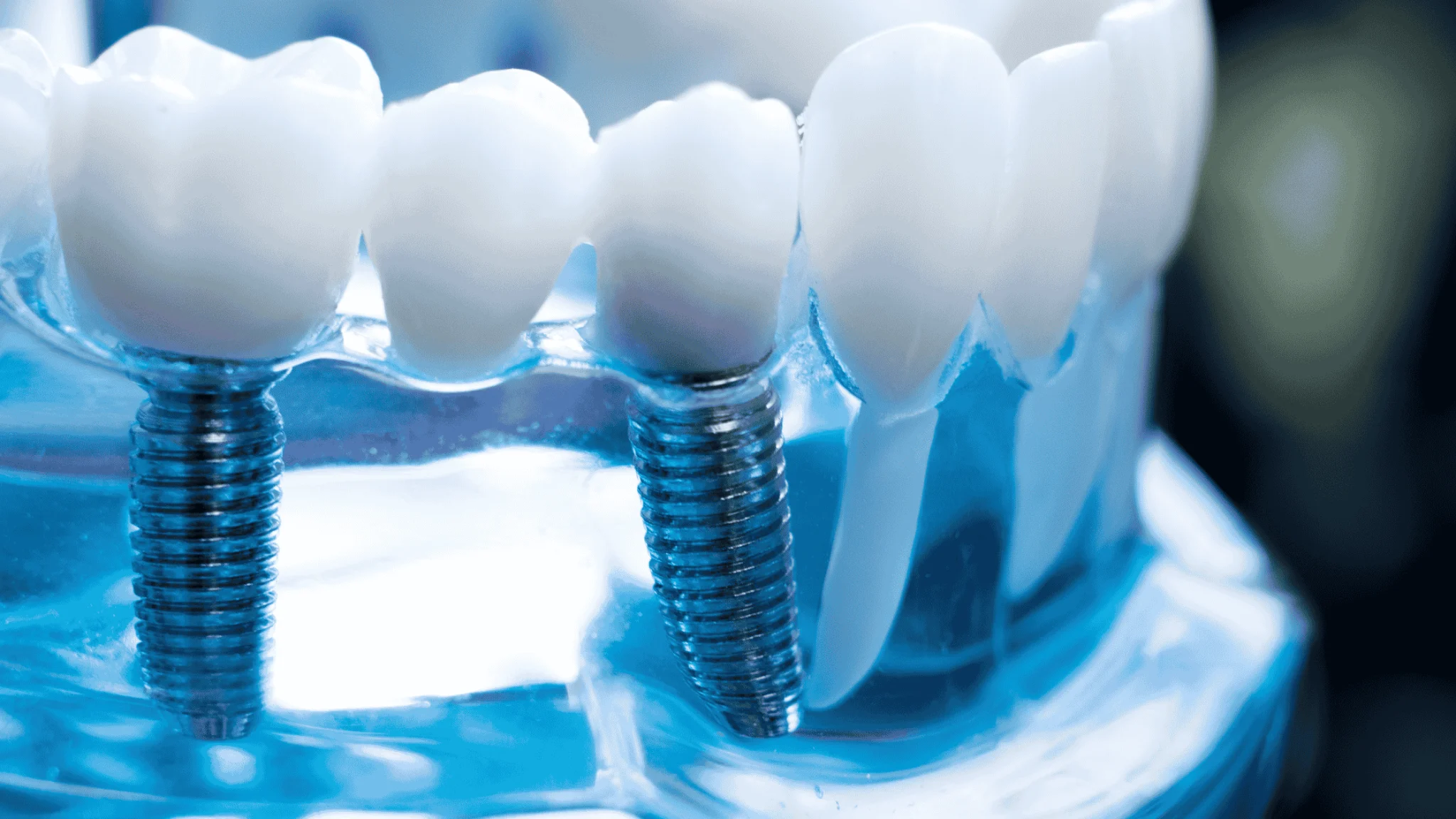
Severe tooth loss changes how you eat, speak, and feel about your smile. You want a solution that feels stable and lasts. When you compare your options, you will likely see All on 4 and traditional dental implants at the top of the list.
If you have severe tooth loss across a full arch, All-on-4 often offers a faster and more practical solution, while traditional implants work best when you want to replace teeth one by one and have enough healthy bone.
Each option uses implants placed in your jaw, but they differ in how many implants you need, how long treatment takes, and who qualifies.
As you look closer, you will see how your bone level, number of missing teeth, budget, and long-term goals shape the best choice for you.
Understanding the differences between all-on-4 vs traditional implants helps you move forward with confidence.
Key Takeaways
- All-on-4 can replace a full arch with fewer implants and a shorter treatment time.
- Traditional implants replace individual teeth and often require more time and procedures.
- Your bone health, tooth loss pattern, and goals determine which option fits you best.
Understanding Severe Tooth Loss and Your Restoration Options
Severe tooth loss affects how you eat, speak, and feel about your smile. You need a solution that protects your oral health and restores strong daily function.
Impact of Extensive Tooth Loss
When you lose many or all of your teeth, simple tasks become harder. You may struggle to chew firm foods like meat, apples, or raw vegetables. This can limit your diet and affect your nutrition.
You may also notice changes in how you speak. Missing teeth can make it harder to pronounce certain words clearly.
Extensive tooth loss often changes your facial shape. Teeth support your cheeks and lips. Without that support, your face can look sunken or older.
Many people also feel embarrassed about their smile. You might avoid photos or social events. A proper dental restoration can help you regain comfort and confidence in daily life.
Tooth Loss and Oral Health Consequences
Tooth loss does more than leave empty spaces. It affects your oral health in direct ways.
When a tooth is missing, the jawbone in that area no longer gets regular pressure from chewing. Over time, the bone can shrink. This bone loss can change how your dentures or future implants fit.
If you still have some natural teeth, they may shift into open spaces. This can lead to bite problems, uneven wear, and gum irritation.
You may also find it harder to clean your mouth. Food can trap in gaps, which increases the risk of gum disease.
Healthy gums and strong bone form the base for any full-arch restoration, so your dentist will check these areas closely before treatment.
Importance of Full-Arch Restoration
If you have severe or extensive tooth loss, replacing one tooth at a time may not make sense. In these cases, your dentist may suggest a full-arch restoration.
A full-arch restoration replaces all teeth in your upper jaw, lower jaw, or both. Instead of treating each missing tooth separately, this approach restores your bite as one unit.
Common options include:
- All-on-4 implants, which use four implants to support a full arch of teeth
- Traditional implants, which may use six or more implants for one arch
- Implant-supported dentures for added stability
The right dental restoration should let you chew, speak, and smile with comfort while also protecting your long-term oral health.
All-on-4 Implants: Concept, Procedure, and Who They’re For
All-on-4 dental implants replace a full arch of teeth using just four implants. You receive fixed prosthetic teeth that stay in place and function like natural teeth.
How All-on-4 Works
All-on-4 is a type of full arch restoration. Your dentist places four implants in your jawbone to support a complete set of prosthetic teeth.
Two implants go in the front of your jaw, where bone density is usually higher. The other two go in the back at an angle. This angled implant placement helps your dentist use available bone and often avoid bone grafting.
The four implants support a fixed bridge, sometimes called implant-supported dentures. Unlike removable dentures, these teeth stay in place and do not shift when you eat or speak.
Over time, your jawbone bonds to the implants through a process called osseointegration. This bonding creates a stable base for long-term arch replacement.
All-on-4 Placement Steps
Your implant procedure starts with a detailed exam. Your dentist checks your jawbone, reviews your health history, and takes 3D scans to measure bone density.
Next, your dentist creates a custom treatment plan. This plan maps out exact implant placement and designs your new prosthetic teeth.
During surgery, the dentist places four implants in one arch. In many cases, you receive temporary teeth the same day, so you do not leave without teeth.
You follow a soft diet while your implants heal. Over several months, osseointegration takes place. Once healing is complete, your dentist replaces the temporary bridge with a final, durable set of teeth.
Ideal Candidates for All-on-4
You may be a strong candidate if you have severe tooth loss in one or both arches. All-on-4 works well when you need a complete arch replacement rather than a few single implants.
This option often suits you if you have reduced jawbone volume but still enough bone in the front of the jaw. The angled design helps your dentist use existing bone without extensive grafting.
You might also choose All-on-4 if you struggle with loose dentures. Fixed implant-supported dentures offer more stability and better chewing function.
If you have advanced bone loss in the upper jaw, your dentist may discuss modified approaches such as zygomatic support.
Traditional Dental Implants: Method, Process, and Best Use Cases
Traditional dental implants replace missing teeth one at a time. You get a strong base in your jawbone and a custom porcelain crown or bridge on top.
How Traditional Implants Function
Traditional implants act like artificial tooth roots. During implant surgery, your dentist places a small titanium post into your jawbone where a tooth is missing.
Your bone then grows around the post in a process called osseointegration. This step locks the implant in place and gives it strength for chewing.
Once healing is complete, your dentist attaches an abutment and a porcelain crown. For a single tooth replacement, one implant supports one crown.
If you miss several teeth in a row, your dentist may use two or more implants to hold an implant-supported bridge. Unlike a regular dental bridge, this method does not rely on adjacent teeth for support.
That helps protect your healthy teeth from extra stress.
Placement and Surgical Phases
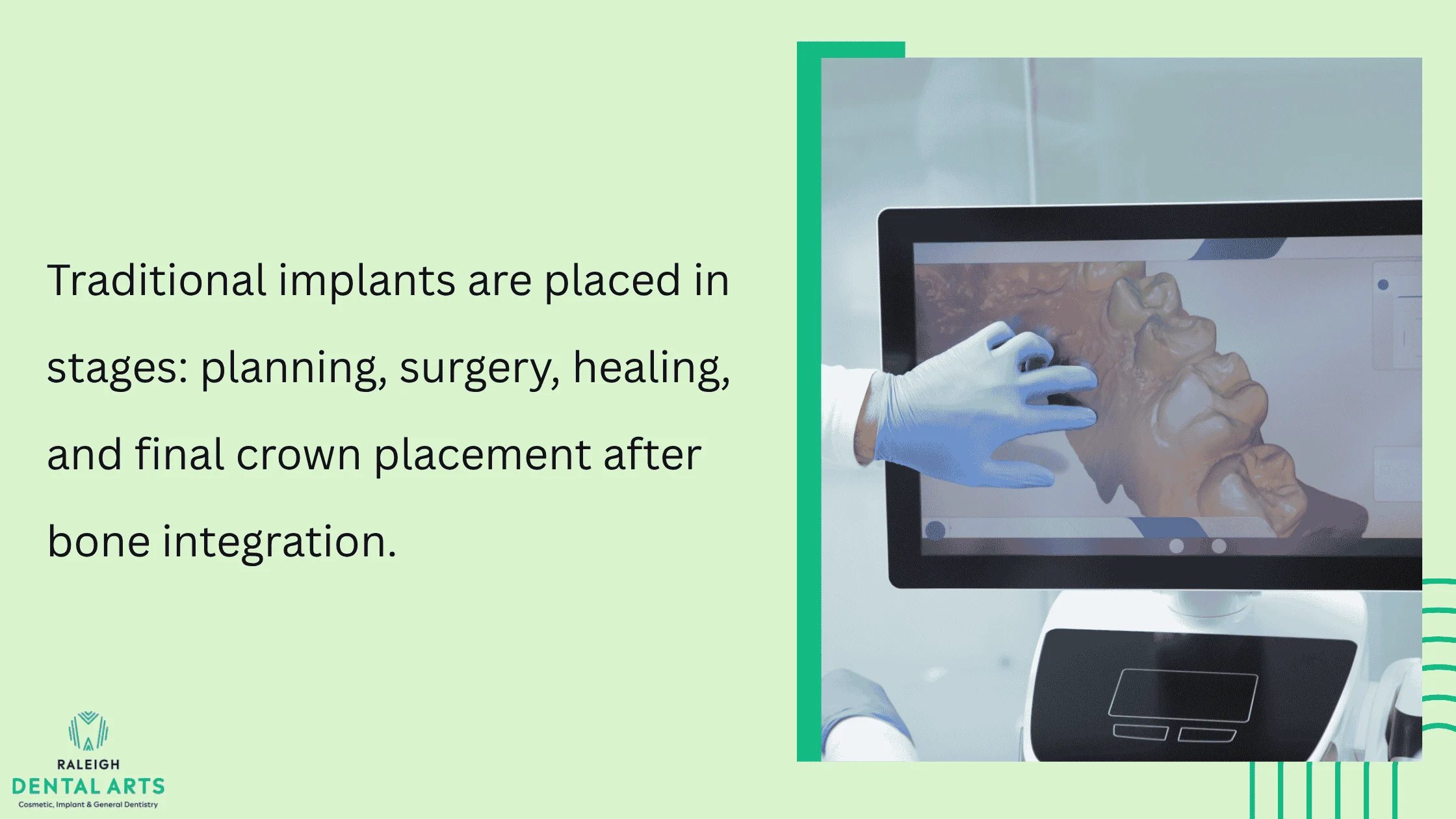
Traditional implant surgery usually happens in stages. First, your dentist reviews your X-rays or 3D scans and builds a detailed treatment plan based on your bone level and health.
If needed, you may have a tooth extraction or bone grafting done before implant placement. After that, your dentist places the implant post into the jawbone.
You then wait several months for osseointegration. This healing period often lasts 3 to 6 months, depending on your health and bone quality.
Once the implant bonds with your jawbone, your dentist attaches the abutment. A custom porcelain crown or porcelain crowns are then secured on top.
When many teeth are missing, the process may involve multiple implant surgeries.
Who Should Consider Traditional Implants
You may be a good candidate if you need single tooth replacement or have a few missing teeth in different areas. Traditional implants work well when your jawbone is thick and healthy.
They also suit you if you want each tooth restored separately. This setup can feel more natural because each implant stands on its own.
Traditional dental implants are often best when:
- You have strong jawbone support
- You want to avoid altering adjacent teeth
- You prefer individual porcelain crowns instead of a full arch
If you lost most or all teeth in one arch, your dentist may suggest another option. But if you want targeted treatment and long-term stability, traditional implants offer a precise and reliable solution.
All-on-4 vs Traditional Implants: Key Differences and Clinical Factors
When you compare all-on-4 vs traditional implants, you look at implant number, bone support, healing time, and cost. These factors shape how your dentist plans treatment for severe tooth loss.
Number of Implants and Arch Solutions
The biggest difference in all-on-4 vs traditional dental implants is the implant number used to support your teeth.
With traditional implants, your dentist often places one implant per missing tooth. If you lose all teeth in one arch, you may need six to eight implants to hold a fixed bridge. Each implant stands on its own and supports a custom crown or is part of a bridge.
All-on-4 uses four implants per arch. Two sit in the front, and two are placed at an angle in the back.These angled posterior implants help support a fullarch bridge with fewer posts.
This design lets your dentist replace a full set of teeth at once.
Bone Grafting Requirements
Your bone volume and bone density play a key role in implant success.
Traditional implants often require strong, thick bone at each implant site. If you have bone loss from missing teeth, your dentist may recommend a bone graft before placing implants. Bone grafts rebuild the jaw, but they add surgery and healing time.
In full-arch cases, this can mean multiple graft sites. That increases cost and extends your treatment timeline.
All-on-4 often needs minimal bone grafting. The angled posterior implants anchor into denser bone toward the front of your jaw. This approach reduces the need for large bone grafts in many patients with moderate bone loss.
However, severe bone loss may still require grafting. Your dentist will use scans to measure bone density and decide what is safe.
Treatment Timelines and Healing
Your treatment timeline and healing period can differ a lot between these options.
Traditional implants usually follow a staged process. First, your dentist places the implant. Then you wait about four to six months for the bone to fuse to the implant. After that, you receive the final crown or bridge.
If you need bone grafting first, you may wait several more months before implant placement. That can stretch treatment over many months.
All-on-4 often allows same-day temporary teeth. In many cases, you leave surgery with a fixed bridge attached to the four implants. Healing still takes months, but you do not go without teeth during that time.
Cost and Accessibility
Cost depends on how many implants you need, whether you need bone grafts, and how complex your case is.
Traditional implants can cost more in full-arch cases because you may need six to eight implants plus possible bone grafting. More implants mean more surgery time and more parts.
All-on-4 uses fewer implants, which can lower surgical costs for full-arch replacement. Fewer grafts also reduce added procedures in many cases.
However, both options require surgery and custom prosthetic work. Insurance coverage varies, and many plans do not cover the full cost. You should ask for a written estimate that includes implants, bone grafts, temporary teeth, and final restorations so you understand the full financial picture.
Comparing Durability, Function, and Aesthetics
When you face severe tooth loss, you need a solution that lasts, works well, and looks natural. Durability, chewing strength, and appearance all affect your daily comfort and long-term oral health.

Long-Term Success and Implant Care
Both options offer strong longevity when you care for them well. Traditional implants replace each tooth with its own post, which spreads chewing forces across the jaw.
This design often supports long-term bone preservation because each implant stimulates the bone like a natural root.
All-on-4 uses four implants to hold a full arch prosthesis. Dentists place the posts at angles to improve stability and reduce the need for bone grafting. That approach can help if you have bone loss.
Your implant care routine matters just as much as the design. You must brush, floss, and attend regular dental visits. With All-on-4, you clean under a full bridge.
With traditional implants, you clean around each crown. Good hygiene lowers your risk of gum disease and implant failure.
Chewing Power and Jaw Function
You want a dental restoration that lets you eat without pain or movement. Traditional implants anchor each crown directly into the jaw. This setup often delivers strong biting force because every implant acts like its own root.
All-on-4 also restores chewing power, but the force spreads across four posts that support the full arch. All-on-4 can work well even when bone density is lower.
That makes it a practical option if you have experienced advanced bone loss.
Both systems help protect your jawbone by providing stimulation during chewing. This support plays a key role in long-term oral health and bone preservation.
Aesthetics and Smile Restoration
Your smile should look natural, not bulky or artificial. Traditional implants allow your dentist to shape each crown to match nearby teeth.
This level of detail often helps in cosmetic dentistry cases where color, spacing, and shape must match precisely.
All-on-4 replaces an entire arch with a fixed bridge. This design works well when many teeth are missing or damaged. It can quickly restore a full smile and improve facial support.
High-quality materials improve both options. A well-made tooth restoration should match your gum line and tooth shade.
With proper planning, both treatments can deliver stable, natural-looking results that support your confidence and daily function.
Case Selection and Patient Experience
Your dentist studies your bone, health history, and daily habits before recommending a solution. Recovery time, comfort, and long-term care also shape the choice between All-on-4 and traditional implants.
How Dentists Choose the Best Treatment
Your dentist begins with a full exam and digital imaging. Many practices use CBCT scans to measure bone height, width, and density in three dimensions. This scan helps guide precise implant placement in modern implant dentistry.
If you have severe bone loss, angled implants used in All-on-4 may reduce or avoid bone grafting. If you miss one or two teeth and have strong bone, traditional implants often make more sense. They replace each tooth with its own post and crown.
Your dentist also reviews:
- Medical conditions like diabetes or heart disease
- Smoking habits
- Bite force and grinding
- Your budget and timeline
In many offices, a prosthodontic specialist joins the planning process. This step ensures your final teeth look natural and fit your bite correctly.
What to Expect: Recovery and Aftercare
Most implant procedures use local anesthesia, so you stay awake but feel numb during surgery. Some offices offer sedation if you feel anxious.
With All-on-4, you may leave with temporary teeth the same day. Traditional implants usually require a healing phase before placing the final crown.
During healing, you can expect:
- Mild swelling for a few days
- Soft food for a short time
- Careful cleaning around the surgical area
Daily care matters. You may use a floss threader or water flosser to clean under a full-arch bridge. Traditional implants require brushing and flossing around each crown, just like natural teeth.
You will also attend follow-up visits. Your dentist checks healing and confirms that the implants bond well with your bone.
Personalized Treatment Planning

Your treatment plan should match your health, goals, and comfort level. Dentists tailor recommendations after reviewing clinical findings and your preferences.
You should discuss:
- How long will the treatment take
- Whether you need bone grafting
- The type of final restoration
- Long-term maintenance needs
In prosthodontics, the final teeth receive as much attention as the implants themselves. Shape, color, and bite alignment all affect comfort and speech.
When you understand each step, you can choose with confidence. A clear, written treatment plan helps you know what to expect from surgery through final placement.
Frequently Asked Questions
You want clear facts before you choose a full-arch implant option. The details below explain differences in design, cost, recovery time, and daily care so you can compare both treatments with confidence.
What are the major differences between All-on-4 and traditional dental implants?
All-on-4 uses four implants to support a full arch of teeth. Traditional implants usually place one implant for each missing tooth.
With All-on-4, your surgeon angles the back implants to use stronger areas of bone. This often reduces the need for bone grafting. Traditional implants place each post straight into the jaw where the tooth is missing.
How long do All-on-4 implants typically last compared to traditional ones?
Both options can last many years when you take care of them. Implant posts often last decades if your gums stay healthy.
Traditional implants may have a slight edge in long-term durability because each implant supports its own crown. All-on-4 prosthetic teeth may need repair or replacement over time, even if the implants remain stable.
Your oral hygiene, smoking habits, and regular dental visits play a big role in how long either option lasts.
Can anyone get All-on-4 implants, or are there specific requirements?
You need enough healthy bone to support implants. However, All-on-4 often works for people with moderate bone loss because the angled implants use denser areas of the jaw.
If you have severe bone loss, you may still need grafting. Some surgeons explain this in detail in All-on-4 vs. Traditional Implants: Which Option Is Right for You?.
Your dentist will review your medical history, gum health, and any habits like smoking before approving treatment.
What is the average cost difference between getting All-on-4 and traditional implants?
All-on-4 usually costs less for full-arch replacement because it uses only four implants per arch. Traditional full-mouth treatment often needs six or more implants, which raises surgical and lab costs.
Many clinics report that All-on-4 can range from about $15,000 to $30,000 per arch. Traditional implants for a full arch can range from about $25,000 to $50,000 or more, depending on how many implants you need.
Extra procedures like bone grafting will increase your total cost.
How does the recovery time compare between All-on-4 and traditional dental implant procedures?
All-on-4 often allows you to receive temporary teeth the same day as surgery. That means you leave the office with fixed teeth while your implants heal.
Traditional implants usually require a healing period of several months before your dentist places the final crown. In some cases, you may wear temporary dentures during this time.
Healing depends on how well your bone bonds to the implants, a process called osseointegration.
Are there any specific care or maintenance tips for All-on-4 implants that differ from traditional implants?
You brush both types just like natural teeth, at least twice a day. Daily flossing is also essential.
With All-on-4, all teeth connect as one bridge. You may need floss threaders or a water flosser to clean under the prosthesis.
With traditional implants, you clean between each crown as you would with natural teeth. Regular dental checkups help catch gum problems early and protect your investment.